
| VIDEO |
| • Purdue President Martin Jischke announces donations by Dolores McCall to advance radition therapy at Purdue's school of veterinary medicine (30 seconds) |
| RELATED INFO |
| • Purdue School of Veterinary Medicine |
| • Indiana Veterinary Medicine Association |
| • Scholer Corporation |
October 20, 2004
$2 million in gifts support vet school
Purdue to open state's first radiation therapy clinic for animals
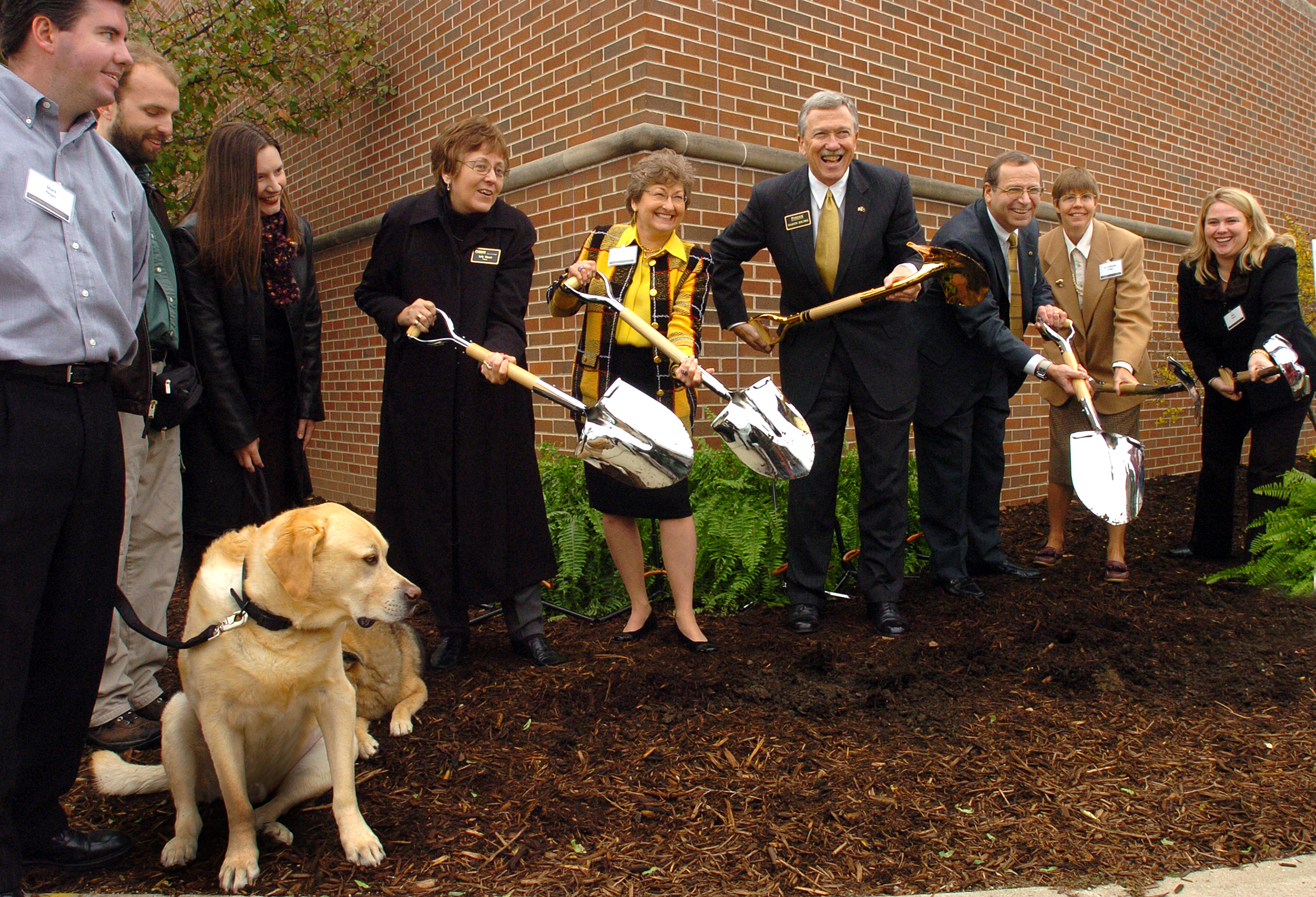
WEST LAFAYETTE, Ind. – The Purdue University School of Veterinary Medicine broke ground today (Wednesday, Oct. 20) on the state's first radiation therapy facility to treat cancer in small animals.
|
Purdue also announced that a Texan whose cats benefited from the care of an alumnus is giving the school a $1 million deferred gift and another $1 million to fund a professorship for a radiation oncologist to work in the new facility. The $1.4 million radiation facility is being funded by a combination of other gift and university funds.
The event, which took place adjacent to the entrance of the Small Animal Hospital on the east side of Lynn Hall, is part of a 10-day celebration that focuses on ways Purdue is improving education and helping the state of Indiana as part of the university's strategic plan and $1.3 billion fund-raising campaign. The name of the professorship is subject to approval by the Purdue Board of Trustees.
|
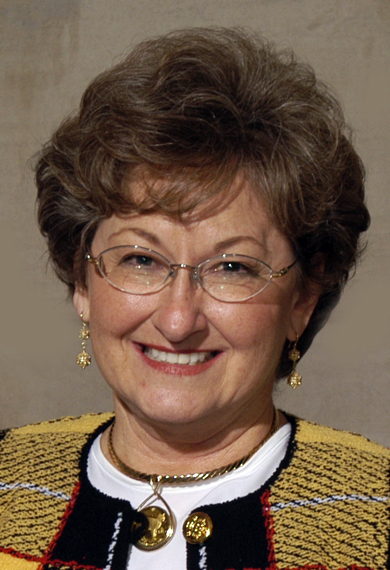
The donor, Dolores L. McCall, an independent oil and gas investor in Midland, Texas, received Purdue's Pinnacle Award, one of the university's highest honors, in recognition of her philanthropy.
"With this new building, Purdue will provide a regional facility for cancer patients referred not only by veterinarians in Indiana but also by those in adjoining states," said Purdue President Martin C. Jischke. "Currently, the closest radiation therapy facilities are at the University of Illinois and private specialty practices in Chicago and Columbus, Ohio.
"This is another way that Purdue can serve our state and nation and provide vital experience to our students. And the timing couldn't be better. Purdue's Department of Comparative Oncology is celebrating its 25th anniversary."
The new facility will add a vital mode of cancer treatment to Purdue's resources in the field of comparative oncology, which is the study and treatment of cancer in pet animals that leads to better understanding, treatment and prevention of similar cancer in humans. Currently, the school's comparative oncology department has the ability to treat veterinary cancer patients with surgery, chemotherapy, photodynamic therapy and certain forms of immunotherapy.
|
By contrast, the radiation therapy unit will allow Purdue to do leading-edge research on combination therapy, joining radiation therapy with other therapies for the treatment of a number of cancers, said Alan Rebar, dean of the school.
"This is a major step forward for Purdue and animal owners across this region," he said. "This facility has been my dream for nine years, ever since I became dean."
Veterinarian Janet Sizelove, president of the Indiana Veterinary Medical Association, said the radiation therapy unit at Purdue will be a great asset to veterinarians throughout the state.
"It will benefit all of the veterinarians of Indiana who have wanted to send clients to a referral hospital for radiation treatment of cancer," Sizelove said. "It's a terrific advantage to have it in our own backyard. I know Purdue is striving to be on the cutting edge for Indiana and has worked hard to bring this facility along. With the correct staffing and support help, it's going to be fabulous. I can't wait to see it."
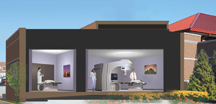
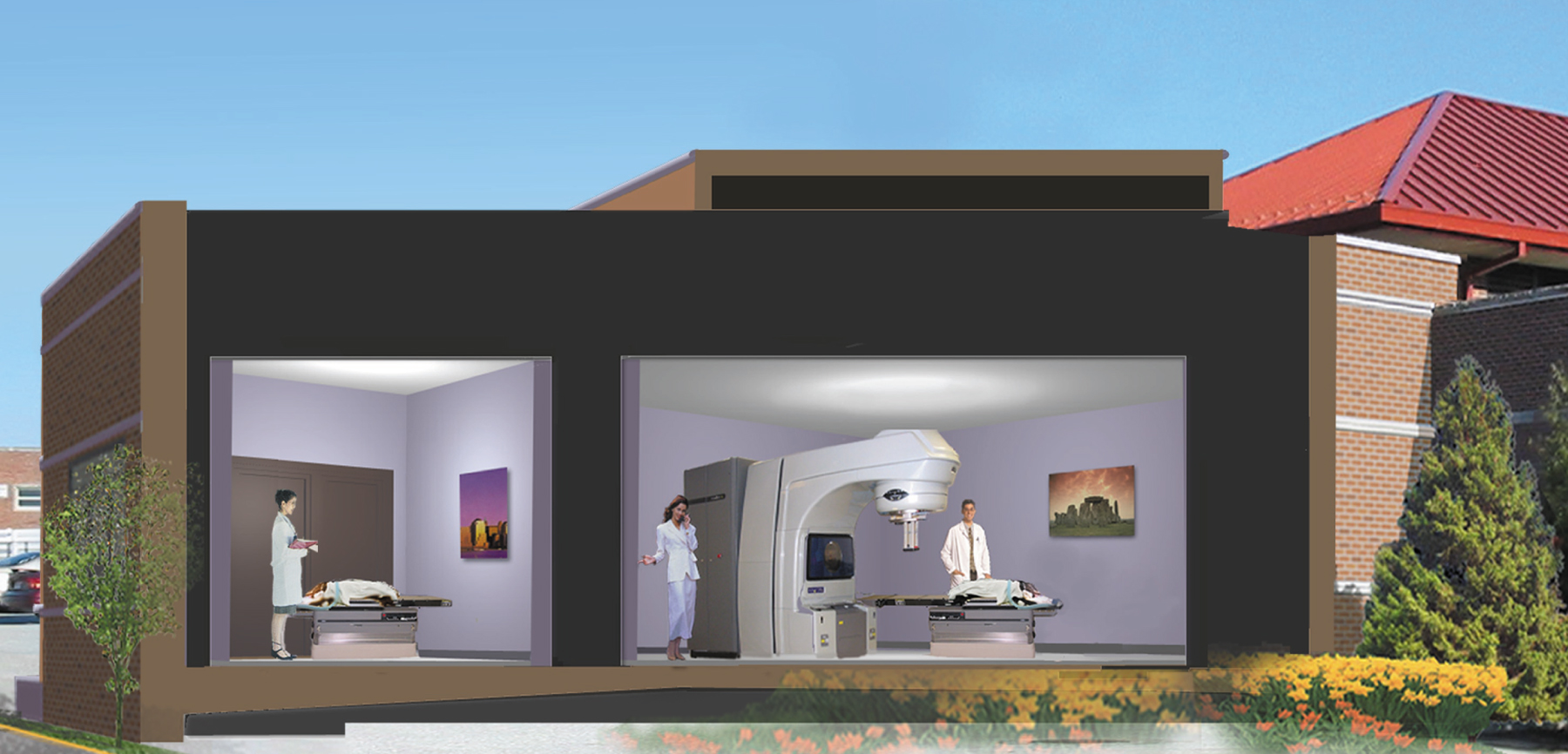
The heart of the radiation facility, the linear accelerator, targets cancerous tissue with therapeutic levels of highly focused radiation. The vault that contains the linear accelerator will have walls that are 3-5 feet thick in order to form an adequate radiation shield around the treatment area.
|
The facility also will have an animal holding area for up to nine small animals, primarily dogs and cats; a control area where veterinarians and veterinary technicians manage the operation of the machine; an induction-treatment area to prepare animals for the procedure; a film-developing room; and a planning room in which computer models will be built to plan the treatment that will deliver dosages as accurately and rapidly as possible.
McCall's relationship with Purdue began several years ago when a close friend and Purdue alumna, Mary K. Hoffman Lemberger, of Wabash, Ind., recommended Purdue alumna Janet Houghton, a veterinarian in Huntington, Ind., to treat Elsa, one of McCall's cats. Dr. Houghton later organized Dog Walk fundraisers, which McCall supported to benefit the oncology program.
"Most of my kitties and dogs have died of some form of cancer. It's been a horror of mine," said McCall, president of the Lone Star Society for the Prevention of Cruelty to Animals in Midland. "So many people also die of cancer. By making this donation, I am supporting cancer research for both humans and four-legged animals. The research at Purdue is shared with the Indiana University School of Medicine to apply to human cancer studies, so I've covered man and man's best friend with the same dollar."
In today's competitive academic environment, universities use endowed academic chairs and professorships – the ultimate peer recognition for faculty – to reward, retain and recruit top scholars for exceptional performance in teaching, research and service.
|

"The Dolores L. McCall Professorship in Comparative Oncology will enable the veterinary school to attain a world-class radiation oncology specialist," said Deborah Knapp, Purdue professor of veterinary clinical sciences and a veterinary oncologist. "Our veterinary school already has top people in their field in medical and surgical oncology, but we currently do not employ a radiation oncologist."
Purdue veterinarians see about 1,000 dogs and cats with cancer per year. Most recently, an average of 75 patients per year have been referred out of state to receive radiation therapy.
|
"We expect that when our radiation therapy facility is in operation, we will be treating 150 to 180 animals in it per year," Knapp said. "I think that in the first year we'll treat at least 75."
Cancer is very common in animals, particularly dogs and cats, Rebar said.
"Many of the cancers of importance in humans are also seen in animals, and in many cases, the animal cancers are very similar to those seen in humans," he said. "When we develop better treatments for cancers in dogs and cats, we are in fact developing better treatments for human cancers."
For example, according to Knapp, two current human studies at the IU School of Medicine involving bladder cancer are based on findings from canine cancer patients at Purdue.
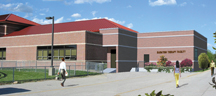
The 2,300-square-foot radiation therapy facility, designed by the Scholer Corp., of Lafayette, will be an addition to Lynn Hall. Construction is scheduled to start in March, with completion in December 2005.
"The architect designing this facility also designed the adjoining addition to Lynn Hall in 1996, so we have continuity there," said Don Staley, Purdue project manager. "Scholer Corporation's knowledge of existing conditions is an asset because the weight of the vault housing the linear accelerator poses structural challenges."
Writer: Reni Winter, (765) 496-3133, rwinter@purdue.edu
Sources: Deborah Knapp, (494-1107), veterinary oncology, knappd@purdue.edu
Alan Rebar, (765) 494-7608, rebar@purdue.edu
Janet Sizelove, (317) 856-4000, jadidvm@aol.com
Donald Staley, (765) 494-3424, djstaley@purdue.edu
Dolores McCall, (432) 682-5662
Claire Chandler, School of Veterinary Medicine director of development, (765) 494-0791, cchandler@purdue.edu
Purdue News Service: (765) 494-2096; purduenews@purdue.edu
PHOTO CAPTION:
Canine cancer survivors, their owners and Purdue University President Martin C. Jischke join Dolores McCall in breaking ground today (Wednesday, Oct. 20) for a $1.4 million radiation therapy facility to be built at the School of Veterinary Medicine. McCall is donating $1 million for an endowed professorship for a radiation oncologist and another $1 million to the school. This will be Indiana's first veterinary radiation therapy facility. Pictured, from left, are Mark Regan, with the Regan's Labrador retriever and cancer survivor Charlie; Kyler Laird; Kitty Laird, with cancer survivor Greta (behind Charlie); Purdue Provost Sally Mason; McCall; Jischke; School of Veterinary Medicine Dean Alan Rebar; comparative oncologist Deborah Knapp; and Amy Regan. (Purdue News Service photo/David Umberger)
A publication-quality photograph is available at https://www.purdue.edu/uns/images/+2004/vetradiation-gb.jpg
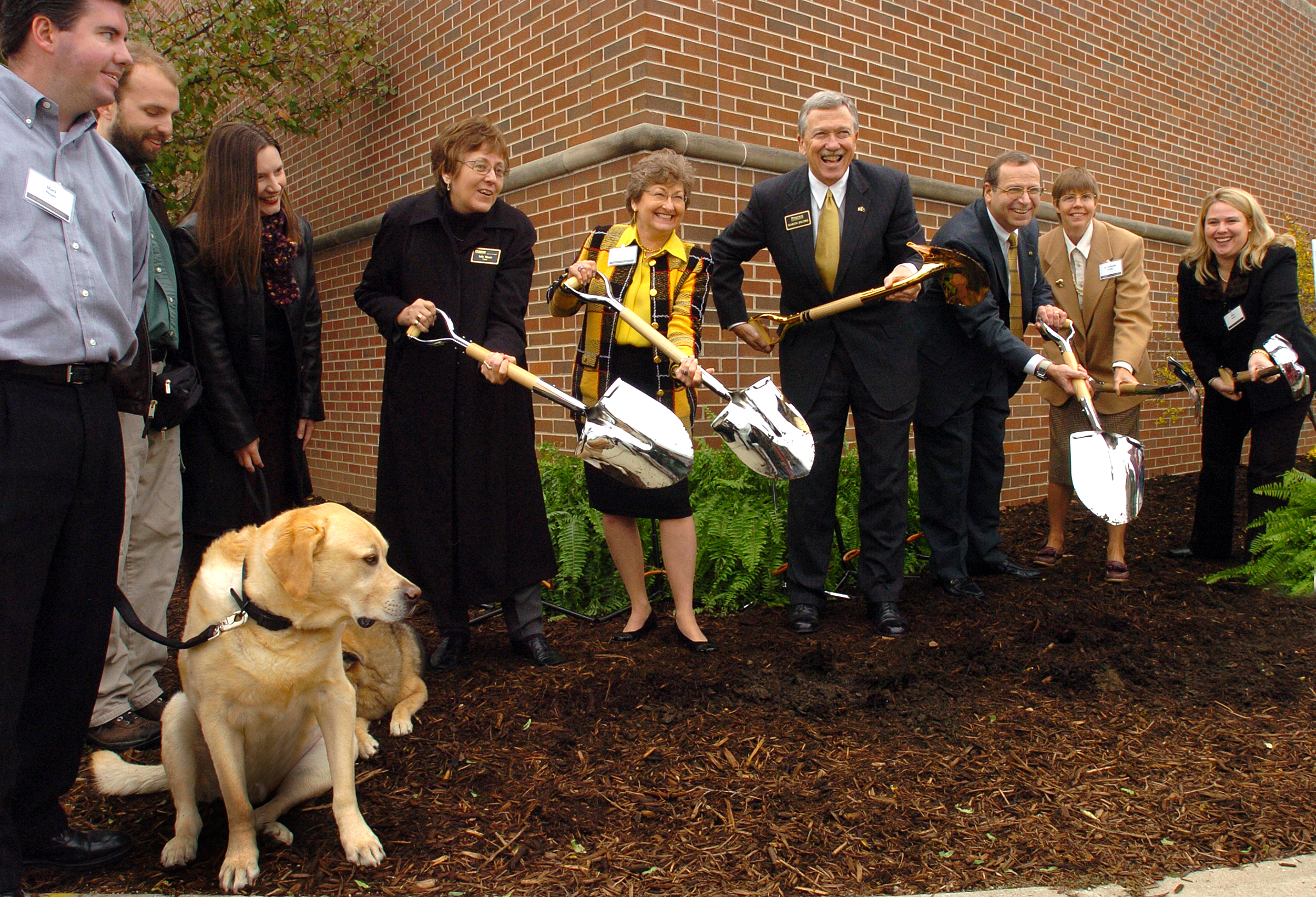
PHOTO CAPTION:
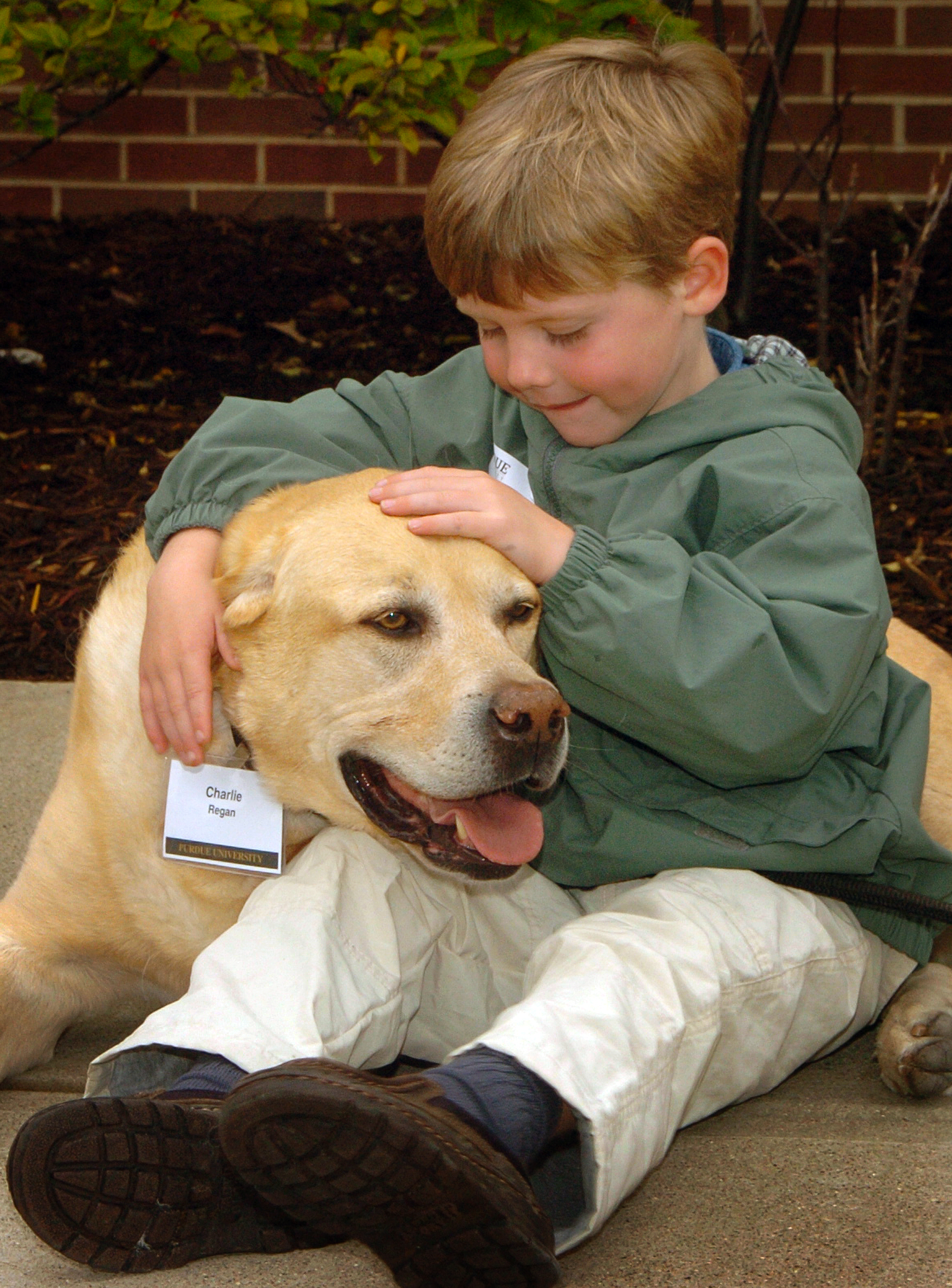
Adam Regan, 4, pets his family's 8-year-old Labrador retriever, Charlie, who has been treated for cancer for three years at Purdue's School of Veterinary Medicine. Amy and Mark Regan, of Crown Point, Ind., brought Charlie and their two sons, Adam and Mark, 3, to the groundbreaking for the state's first veterinary radiation therapy facility. (Purdue News Service photo/David Umberger)
A publication-quality photograph is available at https://www.purdue.edu/uns/images/+2004/vetradiation-survivor.jpg
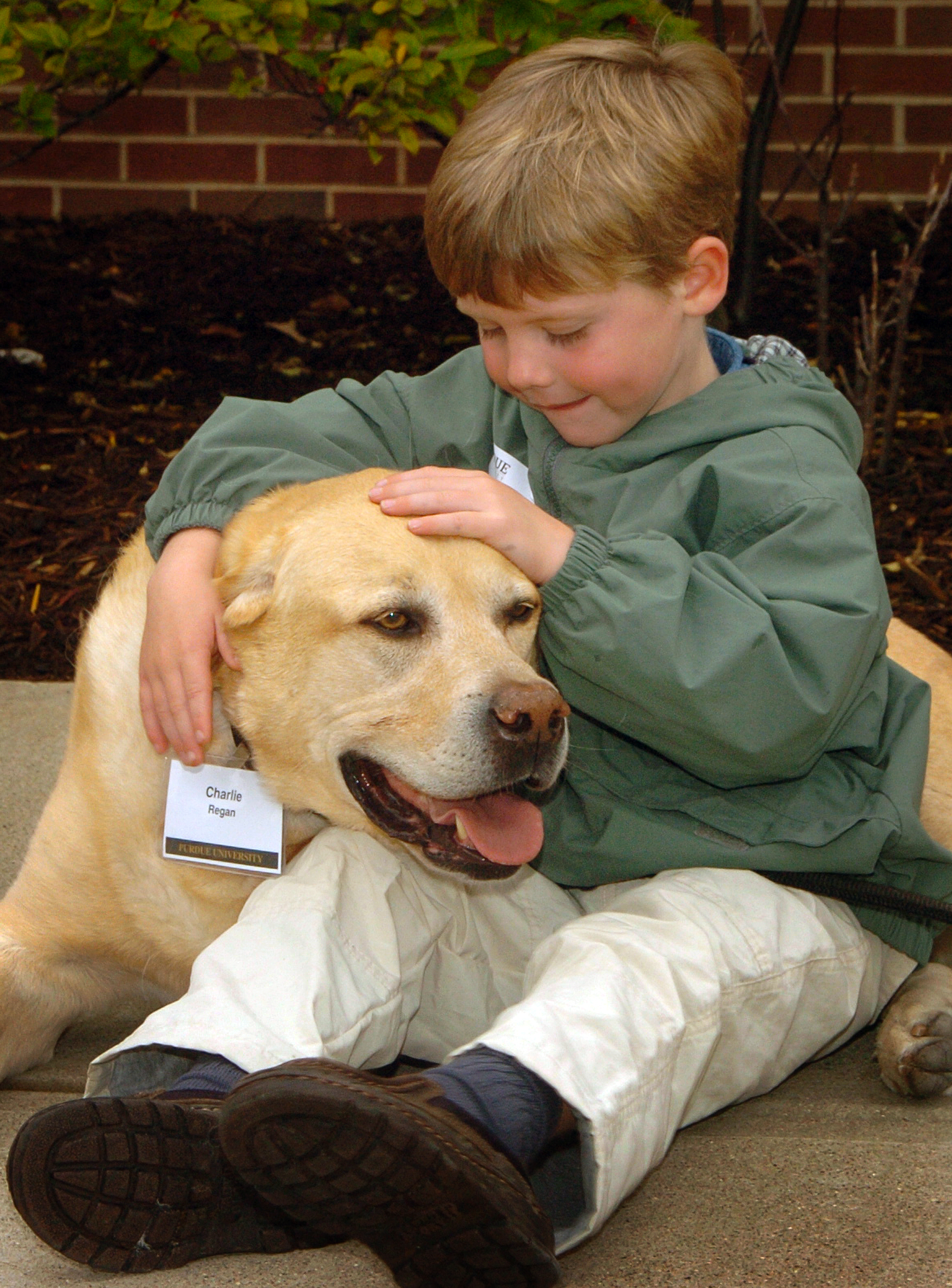
PHOTO CAPTION:
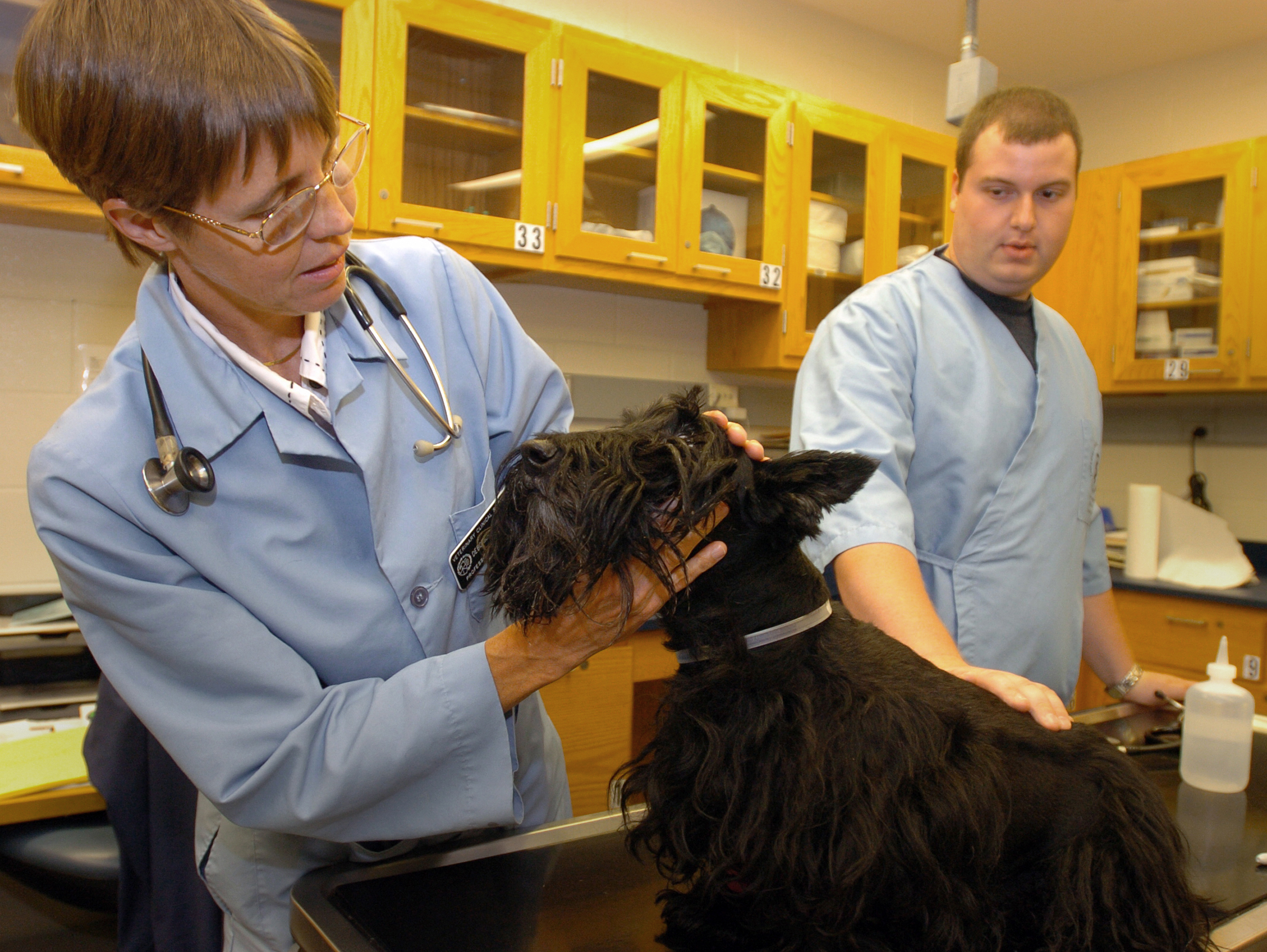
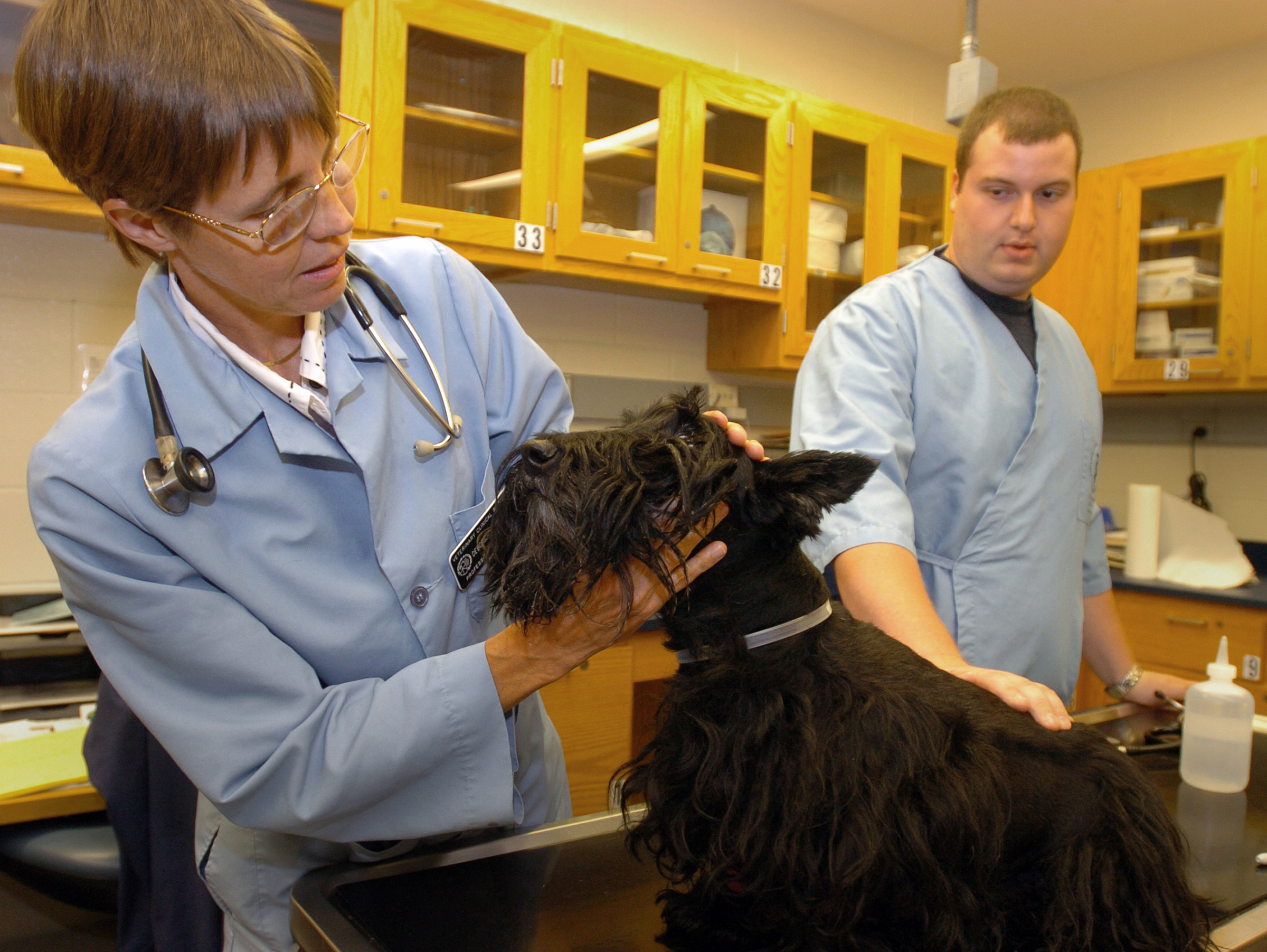
Purdue veterinary oncologist Debbie Knapp examines Bear, a 12-year-old Scottish terrier, in the oncology treatment room at the School of Veterinary Medicine's Small Animal Hospital. Assisting her is Brent Herzberg, a preveterinary student from South Bend, Ind., who is a volunteer with the oncology service. Purdue veterinarians annually treat about 1,000 patients with cancer. (Purdue News Service photo/Dave Umberger)
A publication-quality photograph is available at https://www.purdue.edu/uns/images/+2004/knapp-vetoncology.jpg
To the News Service home page