
Three Purdue researchers win NSF early-career awards
WEST LAFAYETTE, Ind. — Three Purdue University professors have won the National Science Foundation's most prestigious honor for outstanding young researchers.The Presidential Early Career Awards for Scientists and Engineers total a minimum of $400,000 over five years. About 110 researchers, or roughly 20 percent of those who compete for the grants, receive the awards annually.
Purdue's recipients this year are Deborah Follman, an assistant professor of engineering education, who received an almost $530,000 award; and Cristina Nita-Rotaru and Dongyan Xu, both professors in computer science, who each received a $400,000 award.
Details about the Purdue awardees and their research follow:
Engineering self-confidence in undergraduate students:
|
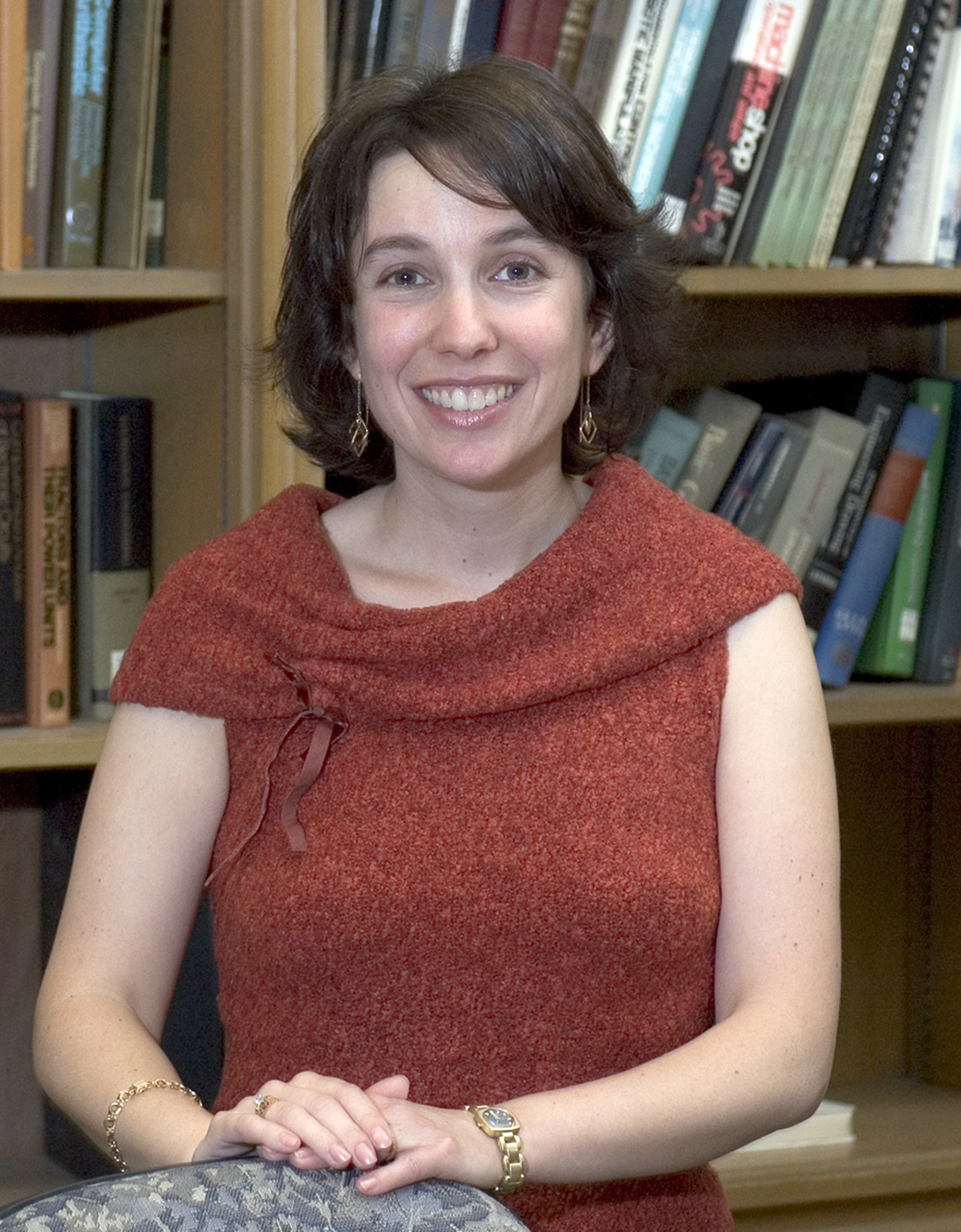
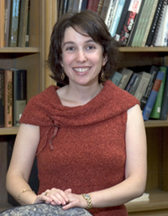
"Many students who leave undergraduate engineering and science programs believe less in their capabilities than those who stay, despite earning similar grades," Follman said. "Self-efficacy has been shown to correlate with student motivation, achievement, satisfaction and professional success. Moreover, gender differences in self-efficacy have been hypothesized to play a major role in the relatively high attrition of women from engineering curricula."
Follman's research will study how students interpret the learning environment and analyze the influence of their interpretations on their self-confidence. "Once we find out how self-efficacy develops, we can create programs that promote student efficacy, and thus strong academic performance and high retention, for both male and female students," she said.
As a result of the study, Follman will develop and test course practices that promote engineering student self-efficacy. She intends to champion the use of these practices through faculty teaching workshops and courses offered by Purdue's Department of Engineering Education.
Scalable, robust and secure group services for wireless mesh networks:

|
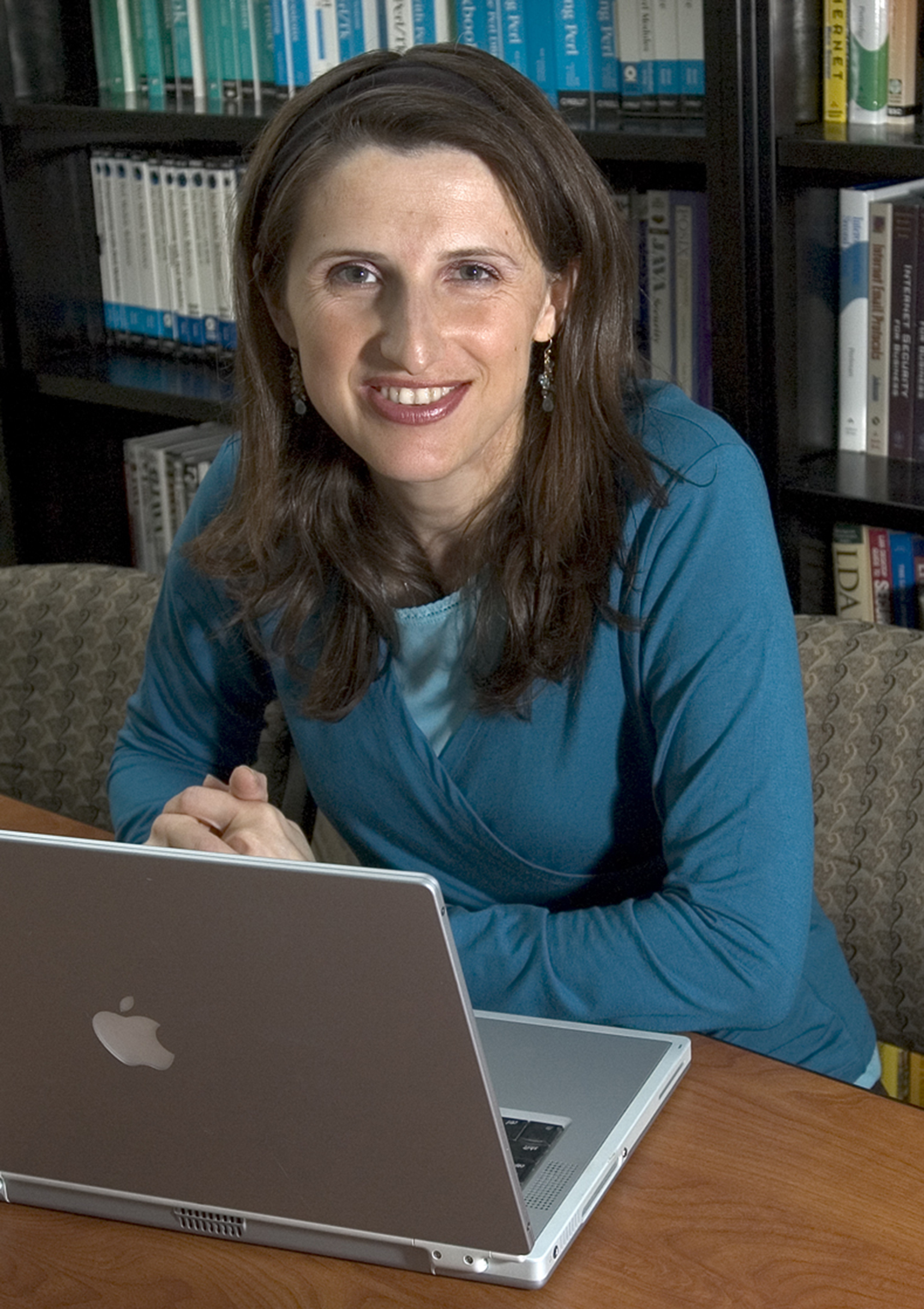
She established and leads the Distributed and Secure Distributed Systems Laboratory where graduate and undergraduate students work together on building dependable and secure computer services for collaborative applications.
Her five-year study will focus on designing survivable services for wireless mesh networks, or creating systems that continue to work even in the presence of server or network failures.
"Creating a network that works no matter what is one that can continue to function even if some components fail or are compromised by attackers," Nita-Rotaru said. "This is a very complex task, particularly for collaborative environments."
The outcomes of this research will benefit applications such as broadband home networking, community and neighborhood networking, enterprise networking, health and medical systems and surveillance systems.
As part of this award, Nita-Rotaru also will study the development of cryptographic protocols that will ensure security of wireless networks.
"When you are chatting with someone over the Internet how do you know you are talking to the person who is responding to your messages?" she asked. "How do you know if you are communicating with your bank and not some impostor? How do you know that nobody can eavesdrop on the communication? For wireless networks, security is a critical aspect."
Nita-Rotaru and her team of graduate and undergraduate students will address these problems by designing and evaluating protocols that will ensure the privacy of the communication exchanged by multiple parties and enable participants to verify the identify of the other participants.
Virtual distributed environment in a shared infrastructure:
|
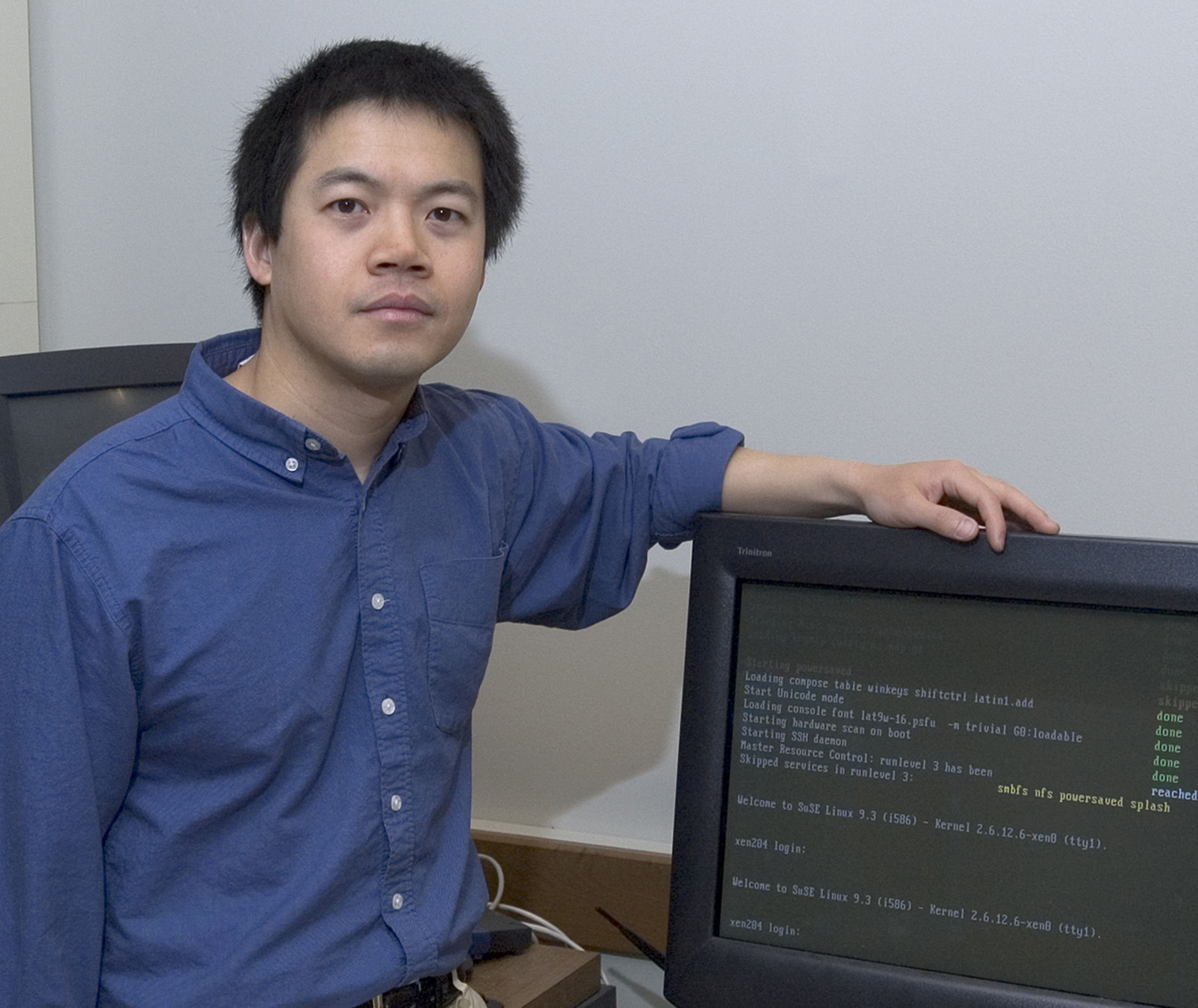
"A virtual distributed environment consists of virtual machines connected by a virtual network. It is agile and self-contained with no static location on the Internet," Xu said. "These virtual machines can 'fly' among physical computers and use intelligence to select the computers that best serve their computation needs. Virtualization technologies actually date to the late 1960s but have recently seen a renaissance in both academia and industry."
Virtual distributed environments can help organizations customize their information-technology infrastructures, improve application performance and contain the negative impact of worms and viruses.
Research prototypes are being developed and deployed in physical computer clusters at Purdue.
"The same pool of physical computer infrastructures can create multiple virtual distributed environments," he said. "A benefit of these virtual environments is that they provide a secure environment to study computer viruses, worms and spyware.
"It's hard and even dangerous to study computer worms because they have the ability to permeate a computer system. We need an environment to observe how a worm can infiltrate a system but prevent the worm from spreading beyond our testing area. A virtual distributed environment does this without letting the worm actually enter the real Internet. It's like a virtual playground for computer worms."
Once the worm has "infected" a virtual machine, researchers can conduct forensic analysis on the machine.
"It is like the show 'CSI' but in the cyberspace because we study the 'crime scene' and determine how the cyber crime happened and how we can prevent it from happening again," Xu said. "And virtual distributed environments provide safe yet realistic 'sandboxes' to investigate worm motive and behavior."
Xu's research will also encourage public use of the emerging cyberinfrastructure for many other research, education and collaboration activities.
Writer: Cynthia Sequin, (765) 494-4192, csequin@purdue.edu
Sources: Deborah Follman, (765) 494-3977, dfollman@purdue.edu
Cristina Nita-Rotaru, (765) 496-6757, crisn@cerias.purdue.edu
Dongyan Xu, (765) 494-6182, dxu@cs.purdue.edu
Purdue News Service: (765) 494-2096; purduenews@purdue.edu
Related Web sites:
Purdue University Department of Computer Science Home Page
To the News Service home page