
| VIDEO |
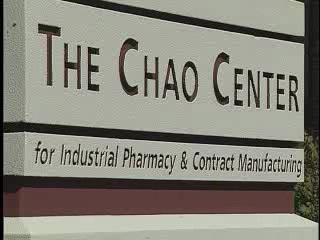 * Chao Center selected to manufacture potent tuberculosis medication (2 minutes, 2 seconds) * Chao Center selected to manufacture potent tuberculosis medication (2 minutes, 2 seconds) |


December 11, 2007
Purdue center takes on North American battle against multidrug-resistant tuberculosis
WEST LAFAYETTE, Ind. - |
The drug, Seromycin, had been developed earlier by Eli Lilly and Co., which, in turn, gave the park's Chao Center for Industrial Pharmacy & Contract Manufacturing the exclusive rights to manufacture, distribute and sell the drug.
Lilly had been producing the drug until now.
The Chao Center is among the first university-affiliated organizations to receive commercial rights to an existing pharmaceutical product and then actually manufacture it, Purdue President France A. Córdova announced Tuesday (Dec. 11) at a lunch with Indianapolis business leaders. The partnership is part of a humanitarian effort to produce and manufacture a needed drug in smaller quantities that can't be produced in a cost-effective way by larger pharmaceutical companies.
Part of the agreement gives Purdue pharmaceutical sciences students the opportunity to work at the Chao Center and learn how to produce drugs under the strict guidelines set by the U.S. Food and Drug Administration. When they graduate, they then have the advanced skills that are needed for the pharmaceutical sector, which is a focus area for the Indiana economy.
The partnership is part of a $135 million effort by Lilly to combat tuberculosis and multidrug-resistant tuberculosis around the world.
"The Chao Center is one of 14 organizations in five continents committed to the Lilly partnership to help combat this daunting disease," said Iain Richardson, director of contract manufacturing for Lilly. "Our main goal is to increase access to effective medications in countries with high instances of tuberculosis and focus global resources on prevention, diagnosis and treatment of patients with multidrug-resistant tuberculosis."
Partners serving patients outside North America include Aspen Pharmacare, Africa's largest pharmaceutical manufacturer; Harvard University and Partners in Health to provide treatment and training in Tomsk, Russia; Hisun Pharmaceutical, one of the largest active pharmaceutical ingredient manufacturers in China; Shasun Chemical and Drugs, one of the largest active pharmaceutical ingredient manufacturers in India; TB Alert, a UK-based charity; the World Health Organization; and the U.S. Centers for Disease Control and Prevention.
"Some of our representatives have just returned from a trip to Africa, and their findings demonstrate even more the importance of treating multidrug-resistant tuberculosis," said Joseph B. Hornett, the senior vice president, COO and treasurer of the Purdue Research Foundation, which owns and operates the Chao Center. "While multidrug-resistant tuberculosis is not common in North America, it is escalating around the world and knocking on our front doors. For example, in the past few months the United States has experienced at least two high-profile cases of this life-threatening disease."
Last summer, an Atlanta lawyer was diagnosed with multidrug-resistant tuberculosis and, following flights to France and Greece, went into quarantine. On Nov. 16, Honolulu police placed a Wahiawa man with tuberculosis in isolation in a local hospital at the request of the Hawaiian Department of Health.
In the United States more than 500 cases of tuberculosis and multidrug-resistant tuberculosis were diagnosed in 2006, and there are more than 9,000 diagnosed cases. About 60 percent of the cases were in California, Florida, Georgia, Illinois, New Jersey, New York and Texas.
Multidrug resistant tuberculosis is highly contagious and difficult to treat. The illness strikes about 450,000 people each year, with the highest rates of prevalence in China, India, South Africa and the countries of the former Soviet Union. According to the World Health Organization, 8.8 million cases of tuberculosis were reported worldwide in 2005.
The World Health Organization estimates that the average multidrug-resistant tuberculosis patient infects up to 20 other people in his or her lifetime, and cases have been found in nearly every country surveyed by the organization. When drugs used to treat multidrug-resistant tuberculosis are misused or mismanaged, the even more virulent drug-resistant tuberculosis can develop.
Besides manufacturing the drug, Lilly also is helping others learn to do it as well.
"Lilly is actively training people around the world to manufacture these drugs in their own countries." said Craig Svensson, dean of the College of Pharmacy, Nursing and Health Sciences, which is a Chao Center partner.
Under the agreement, Lilly provides the Chao Center with the intellectual property and associated analytical, regulatory, quality and technical support, including all necessary and related regulatory materials. Lilly also has agreed to donate equipment and supplies to the Purdue Research Foundation, the Chao Center's parent organization, which will be used to support the Seromycin® manufacturing process. In turn, the center will make the prescription drug available to pharmaceutical wholesalers in the United States, Canada, Puerto Rico, Guam and the U.S. Virgin Islands for distribution to pharmacies.
"We have a waiting list of orders for Seromycin® that we began filling this week using a warehousing and distribution system that was developed in preparation for the launch of this drug," said Craig Davis, executive director of the Chao Center.
The formal transfer of exclusive rights for Seromycin® was confirmed by notifications sent to the U.S. Food and Drug Administration, the U.S. Office of Patents and Trademarks, and drug wholesalers in the United States.
About the Chao Center
The Chao Center for Industrial Pharmacy & Contract Manufacturing (https://www.thechaocenter.com/) opened in 2005 and is an affiliate of Purdue University (https://www.purdue.edu) and the School of Pharmacy and Pharmaceutical Sciences at Purdue. Initiated through a donation to the school from alumni Allen Chao, Ph.D., and his wife, Lee Hwa-Chao, the center is designed to provide a means to educate students in good manufacturing practices (cGMP), provide pharmaceutical services to the pharmaceutical industry and provide an environment for Purdue faculty to conduct research in a cGMP facility. The center is located in Purdue Research Park where 140 businesses, of which more than 90 are high-tech, employ more than 2,900 people.
In addition to its role as a contract manufacturer supporting clinical trials, the center will produce its own products, known as "rare legacy drugs," for which small demand makes production by large pharmaceutical manufacturers cost prohibitive. Rare legacy drugs often are not manufactured profitably large companies but can still generate significant revenue for smaller firms.
About Eli Lilly and Co.
Lilly, a leading innovation-driven corporation, is developing a growing portfolio of first-in-class and best-in-class pharmaceutical products by applying the latest research from its own worldwide laboratories and from collaborations with eminent scientific organizations. Headquartered in Indianapolis, Lilly provides answers - through medicines and information - for some of the world's most urgent medical needs. Additional information about Lilly is available at https://www.lilly.com.
Purdue Research Foundation marketing and communication contact: Cynthia Sequin, (765) 494-4192 (office), (765) 413-6031 (mobile), casequin@prf.org
Sources: Joseph Hornett, (765) 494-8645, jbhornett@prf.org
Iain Richardson, (317) 651-0689, Iain.richardson@lilly.com
Craig Svensson, (765) 494-1368, svensson@purdue.edu
Craig Davis, (765) 464-8414, daviscw@thechaocenter.com
Purdue News Service: (765) 494-2096; purduenews@purdue.edu
PHOTO CAPTION:
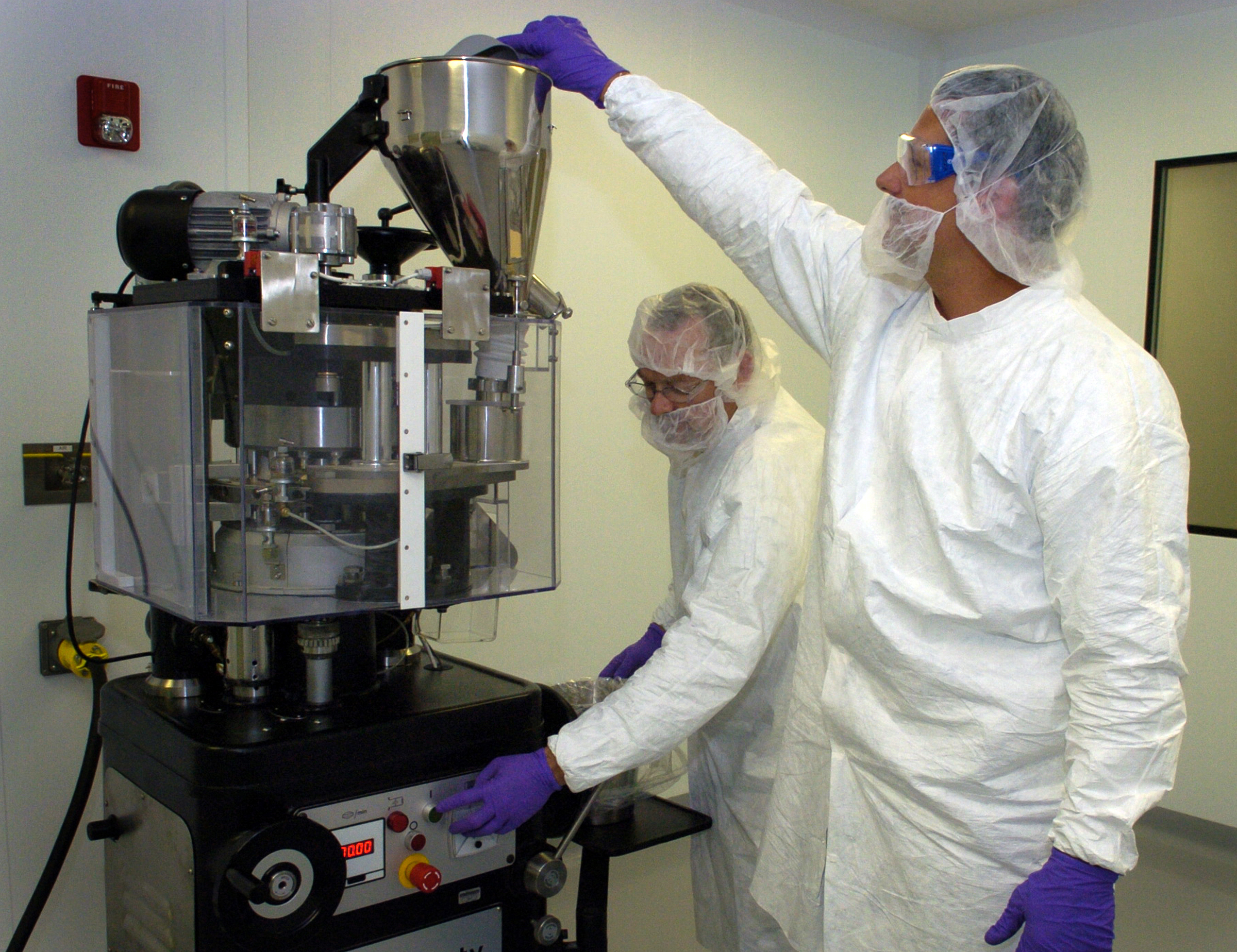
Facilities coordinator Brad McKinney, at right, and David Eubank, manufacturing and facilities manager, test a tablet-making machine at the Chao Center for Industrial Pharmacy & Contract Manufacturing. (Purdue News Service file photo/David Umberger)
A publication-quality file photo is available at https://www.purdue.edu/uns/images/+2005/chaocenter-machine.jpg
To the News Service home page