Employment Opportunities for College Graduates
in Food, Agriculture, Renewable Natural Resources and the Environment
United States, 2025-2030
Preface
This report continues a series of reports on employment opportunities for college graduates in food, agriculture, renewable natural resources and the environment (FARNRE) initiated in 1980. While maintaining consistency in data sources and procedures where possible, the 2025-2030 study differs from earlier studies in this series in several important ways. First, associate degree holders are included in the analysis. Second, the procedure used to develop the forecast of job openings is more rigorous than that used in earlier studies and draws on web-scrape data of position announcements for FARNRE jobs. Because employers are dropping degree requirements in position announcements, some jobs that will be filled by high school graduates are also included in the forecast of job openings (about 10% of the total FARNRE jobs available).
Third, the job openings data have been further disaggregated beyond the four general job clusters used in previous reports (Business and Management; Science and Engineering; Food and Biomaterials Production; and Education, Communication and Governmental Services) into 11 subclusters. In addition, the job openings projections have been disaggregated into five geographic regions. The expansion of the job openings data into 11 subclusters and the disaggregation of job openings into five geographic regions represent enhancements to the analysis. These enhancements are significant because: 1) moving from four broad clusters to 11 subclusters provides a more detailed understanding of workforce demand across specific career fields; and 2) regional projections reveal how job opportunities vary across the U.S., supporting more targeted educational programs and workforce development strategies.
While these changes represent improvements in study methodology with the goal of providing more robust demand and supply estimates for FARNRE jobs/graduates, they also mean trend analysis drawing on previous reports must explicitly consider these changes and should be conducted only where appropriate. Appendix 2 to this report provides detail on the data sources and procedures used to develop the estimates of job openings and available FARNRE graduates for the 2025-2030 report.
The report is intended to help both colleges and universities and employers anticipate shifts in the supply of and demand for FARNRE talent. For colleges and universities, such shifts can impact student recruitment, career office strategies and academic program investments. For employers, insights on supply of and demand for FARNRE talent can impact recruiting approaches, onboarding programs and broader human resource strategies.
EMPLOYMENT OPPORTUNITIES FOR COLLEGE GRADUATES BETWEEN 2025 AND 2030
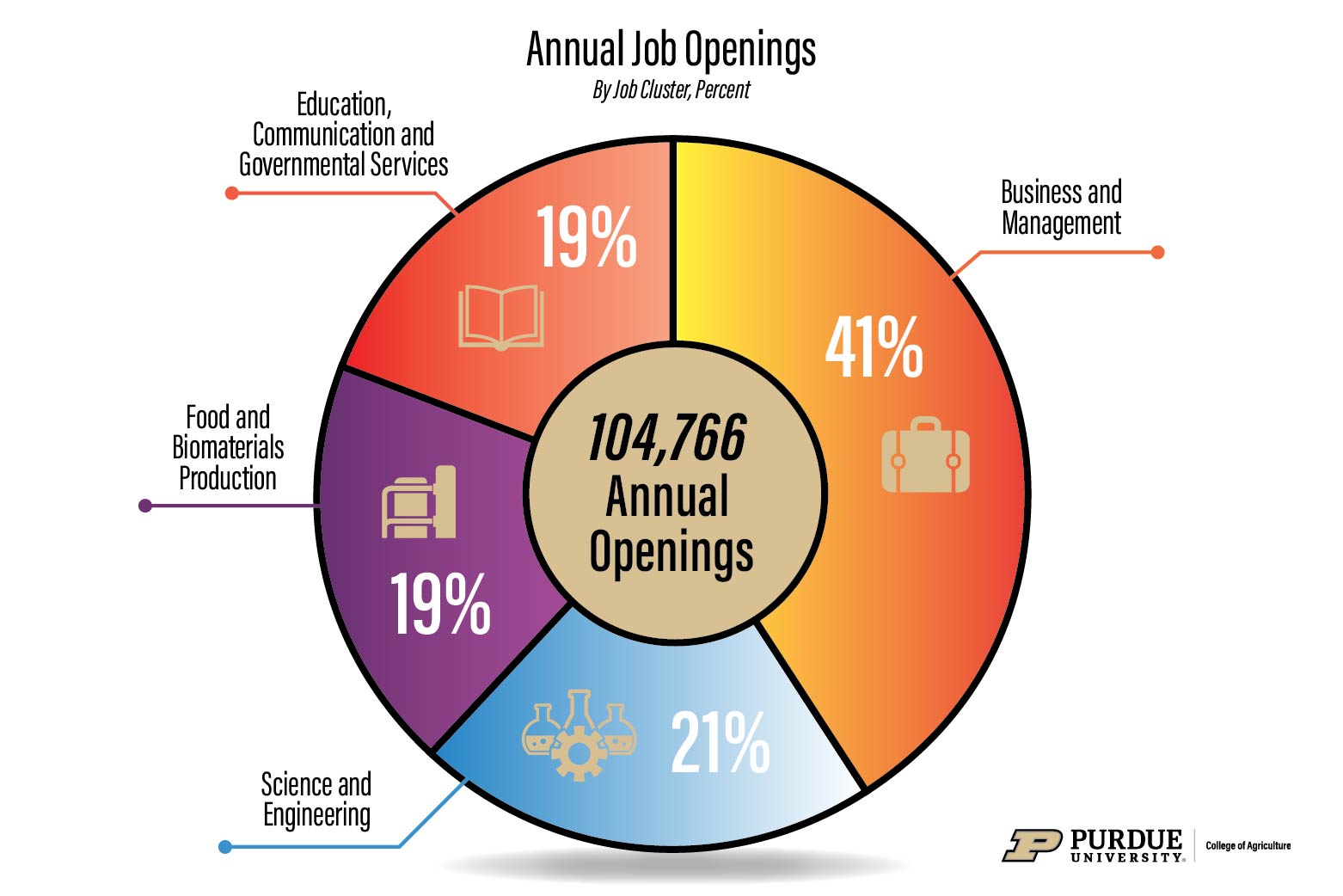
We expect that in the United States between 2025 and 2030, employment opportunities will remain strong for new college graduates with interest and expertise in food, agriculture, renewable natural resources and the environment. Over that period, we forecast an average of 104,766 FARNRE job openings annually (Figure 1). This figure is much higher than the 59,400 FARNRE job openings reported in the 2020-2025 study for three reasons: 1) a more rigorous approach to determining FARNRE job openings; 2) the inclusion of associate degree holders in this study; and 3) the inclusion of some jobs open to those with a high school degree. We estimate that 90% of these 104,766 positions will require at least an associate degree, with the other 10% open to those without a degree. A list of factors that could impact this forecast is included later in the report.
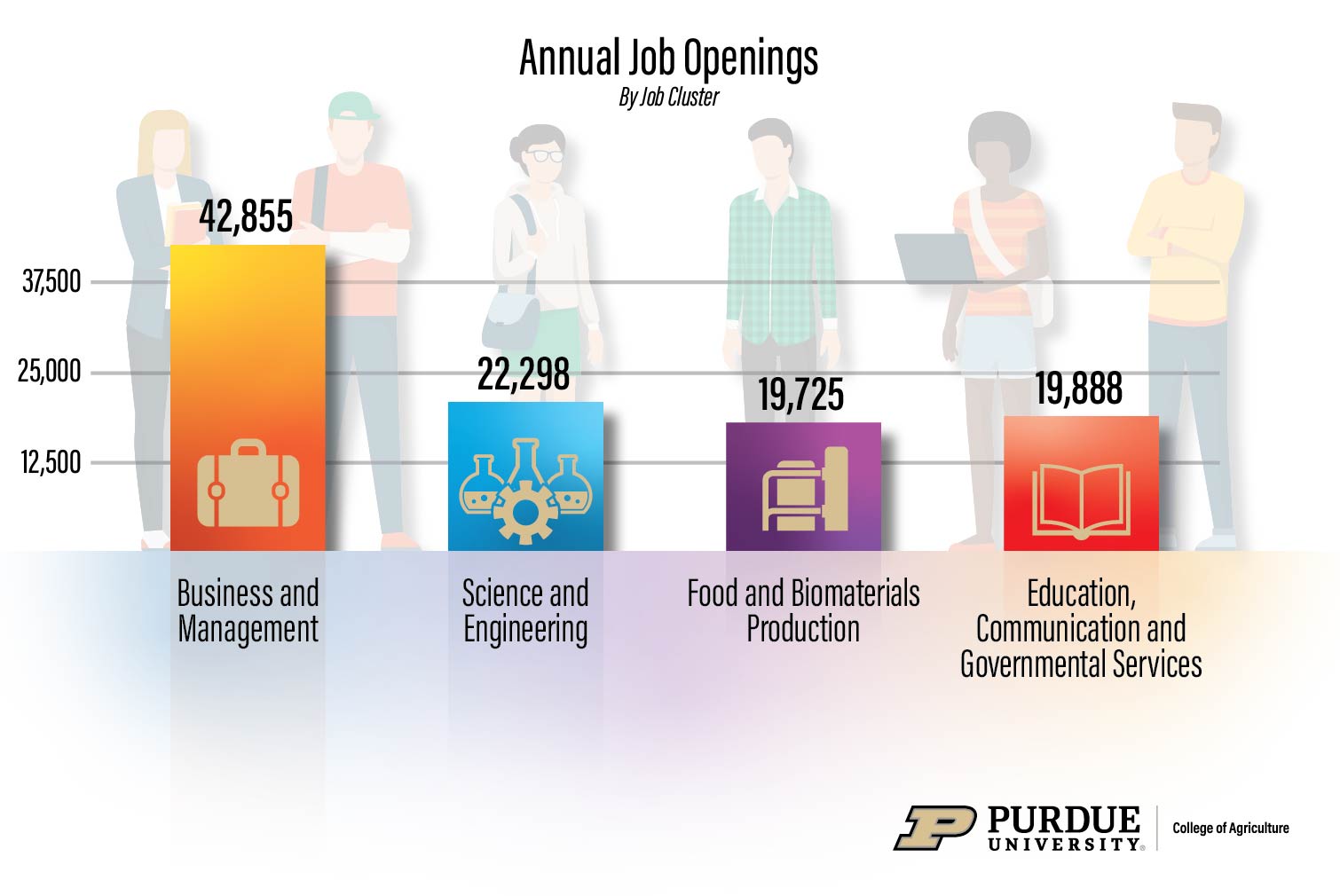
The major employment areas for new FARNRE college graduates will be in Business and Management (42,855 annual openings) and in Science and Engineering (22,298 annual openings), making up 41% and 21%, respectively, of anticipated FARNRE job openings (Figure 2). Employment opportunities in Food and Biomaterials Production (19,725 annual openings) and the Education, Communication and Governmental Services category (19,888 annual openings) each account for 19% of jobs available to college graduates in food, agriculture, renewable natural resources and the environment.
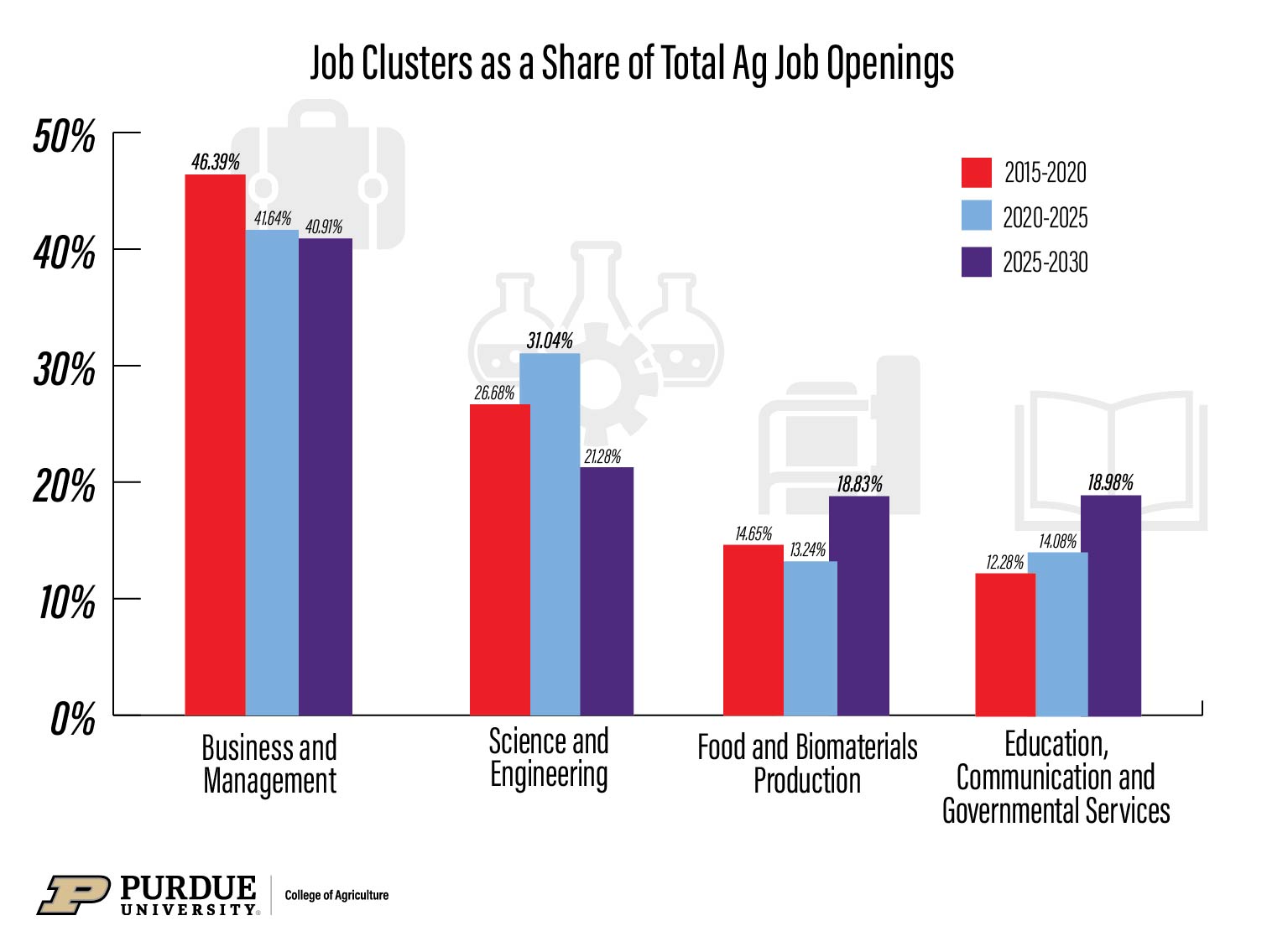
While the actual job openings figures cannot be compared with previous studies, some insight into changes in openings by job cluster is provided by looking at the percentage breakdown across the four job categories. Compared with the previous five-year report, the proportion of job openings in Business and Management is relatively unchanged (42% in 2020 vs. 41% in 2025). There is a decline in the proportion of jobs available in the Science and Engineering category (31% vs. 21%), and corresponding increases in both Food and Biomaterials Production (13% vs. 19%) and Education, Communication and Governmental Services (14% vs. 19%). However, even with the shifts across clusters noted in the 2025-2030 study, these breakdowns have been relatively stable over time (Figure 3).
EMPLOYMENT OPPORTUNITIES IN JOB SUBCLUSTERS
New to the 2025-2030 study, the four primary job clusters were further segmented into 11 subclusters (Figure 4).
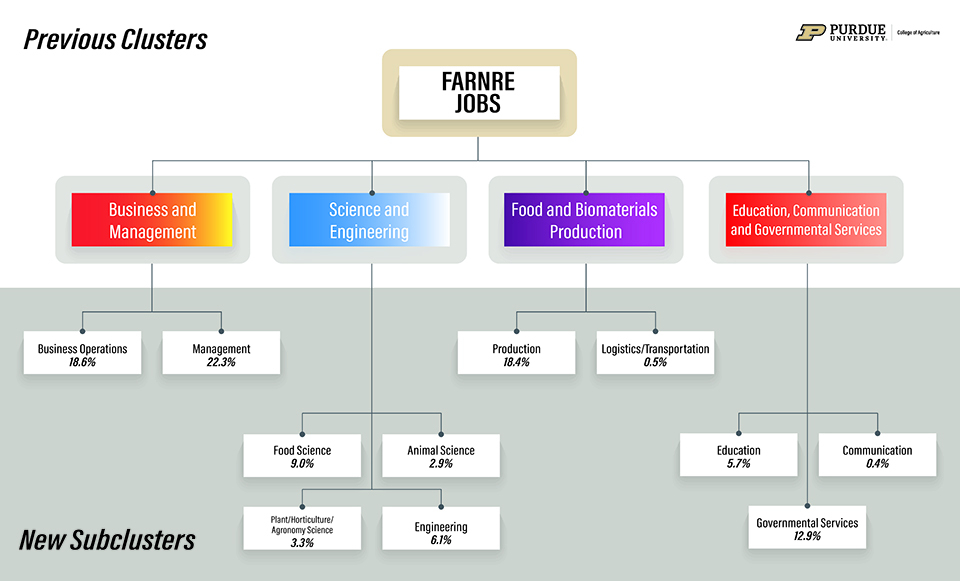
Business and Management jobs are equally divided between those categorized as Business Operations (18.6%) and those categorized as Management (22.3%) (Figure 4). Food Science (9.0%) and Engineering (6.1%) account for 70.9% of the jobs in the Science and Engineering category. In the Food and Biomaterials Production job cluster, virtually all jobs fall into the Production (18.4%) subcluster. Governmental Services (12.9%) jobs represent more than two-thirds of the jobs in the Education, Communication and Governmental Services job cluster. It should be noted that these 2025-2030 forecasts do not include any impacts of the federal workforce reduction initiatives such as the 2025 Deferred Resignation Programs, so the forecast of available jobs in the Governmental Services job subcluster may be overly optimistic.
EMPLOYMENT OPPORTUNITIES ACROSS GEOGRAPHIC REGIONS
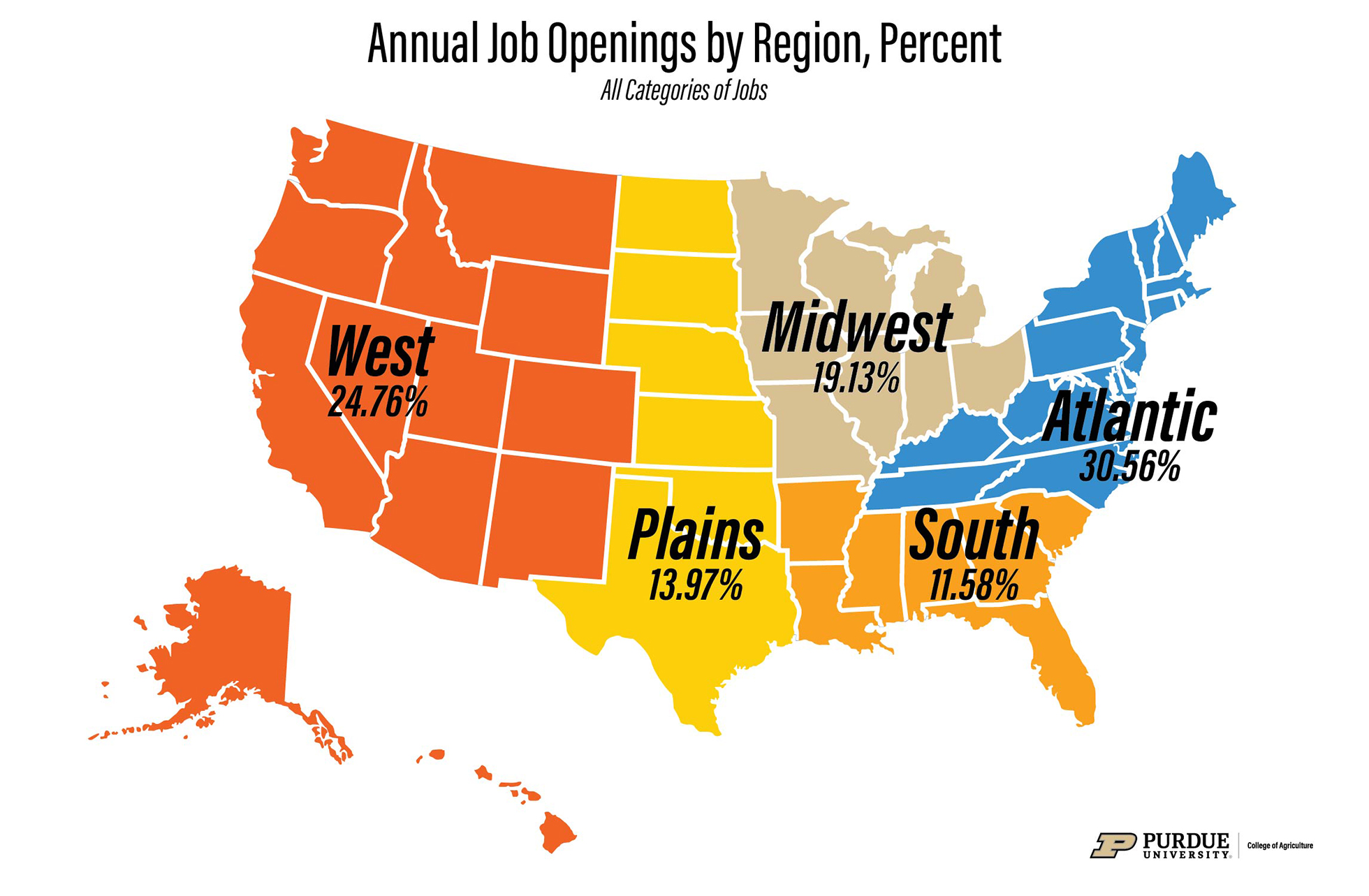
Also new to this study is a disaggregation of total job opportunities into five geographic regions. These regions represent USDA ARMS III Farm Production Expenditure Regions. The ARMS III geographic breakdown was used based on the assumption that available FARNRE jobs will support and be aligned with agricultural production within geographic regions. Figure 5 shows that more than 30% of available jobs are in the Atlantic region, with about 25% of the FARNRE jobs in the West region. The Midwest region accounts for roughly 19% of available positions, with the Plains region at nearly 14%, and the South region at nearly 12%. The general trends in the four job clusters hold across the five geographic regions. Detail on job openings by cluster across geographic regions is presented in Appendix 1.
COLLEGE GRADUATES BETWEEN 2025 AND 2030
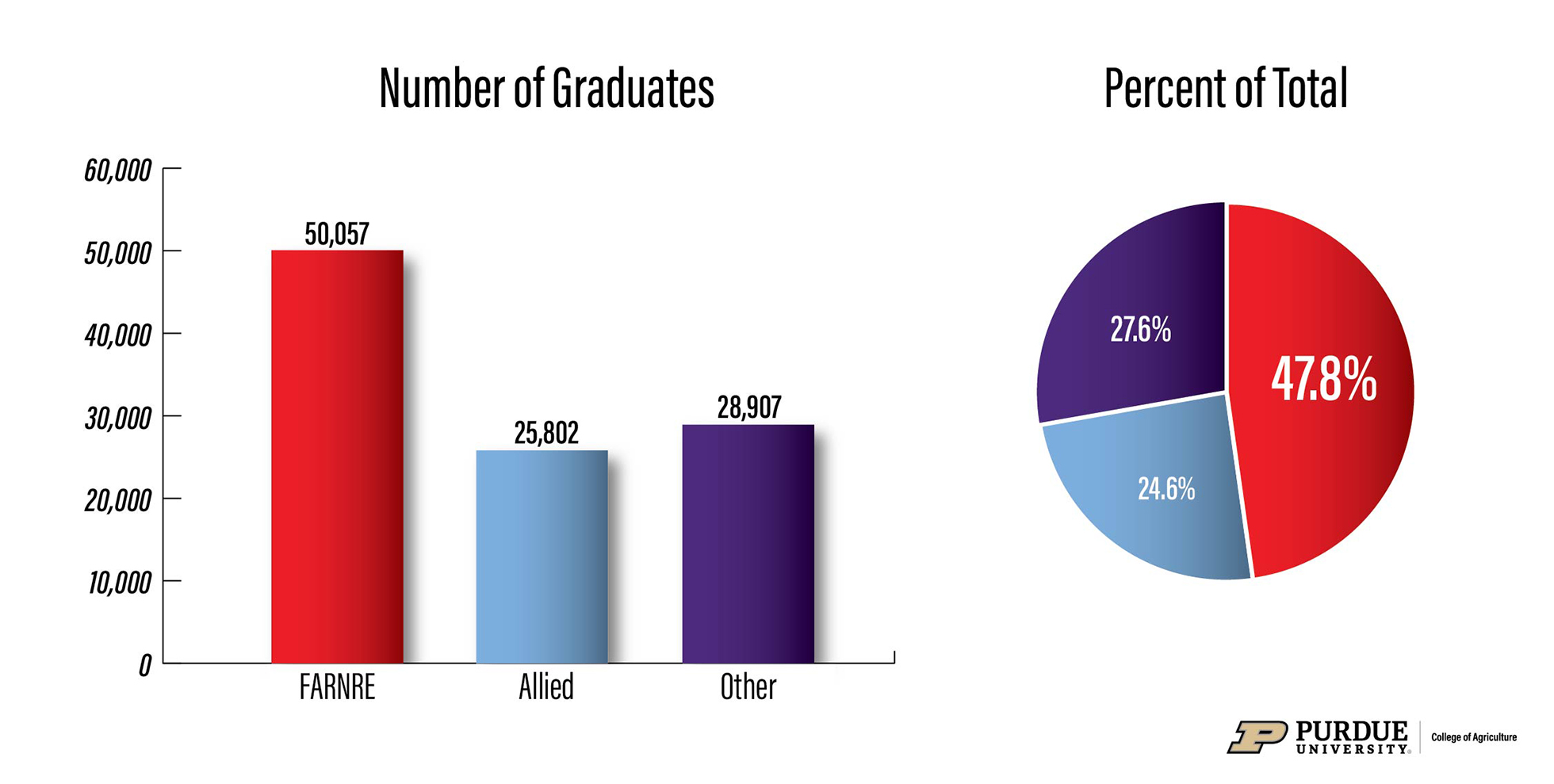
In the United States between 2025 and 2030, the number of new college graduates (including those earning associate degrees) annually seeking employment opportunities in food, agriculture, renewable natural resources and the environment will remain strong. Graduates from degree programs (associate, baccalaureate, and postgraduate/professional) in food, agriculture, renewable natural resources and the environment will fill 47.8% (50,057) of the available FARNRE positions annually (Figure 6). Graduates with allied degrees – degree specializations offered by public and private nonprofit higher education programs in biological sciences, engineering, health sciences, business, communication, etc. – who are expected to compete for employment with FARNRE graduates will account for 24.6% (25,802) of the annual new graduate supply pool.
To fill the total 104,766 FARNRE jobs available, an additional 28,907 other graduates (Figure 6) will be needed annually (27.6%). About 10,477 (10%) of these 28,907 positions will be filled by individuals without a degree. The remaining 18,430 (17.6%) positions will need to be filled by additional allied majors or graduates from majors outside those in the allied category in order to meet total FARNRE demand.
Following the procedure used in prior reports, FARNRE graduates were assigned to one of the four job clusters based on their major (see Appendix 2). It is important to note that the major-job cluster relationship is quite fluid – especially given the increasing prevalence of second majors, minors, and certificates in areas other than the student’s primary major. For example, a student majoring in agricultural engineering and classified in the Science and Engineering cluster may well take a job in the Business and Management cluster or the Food and Biomaterials Production cluster. In the end, it is quite possible that a student in any FARNRE major could take a position in any of the four job clusters.
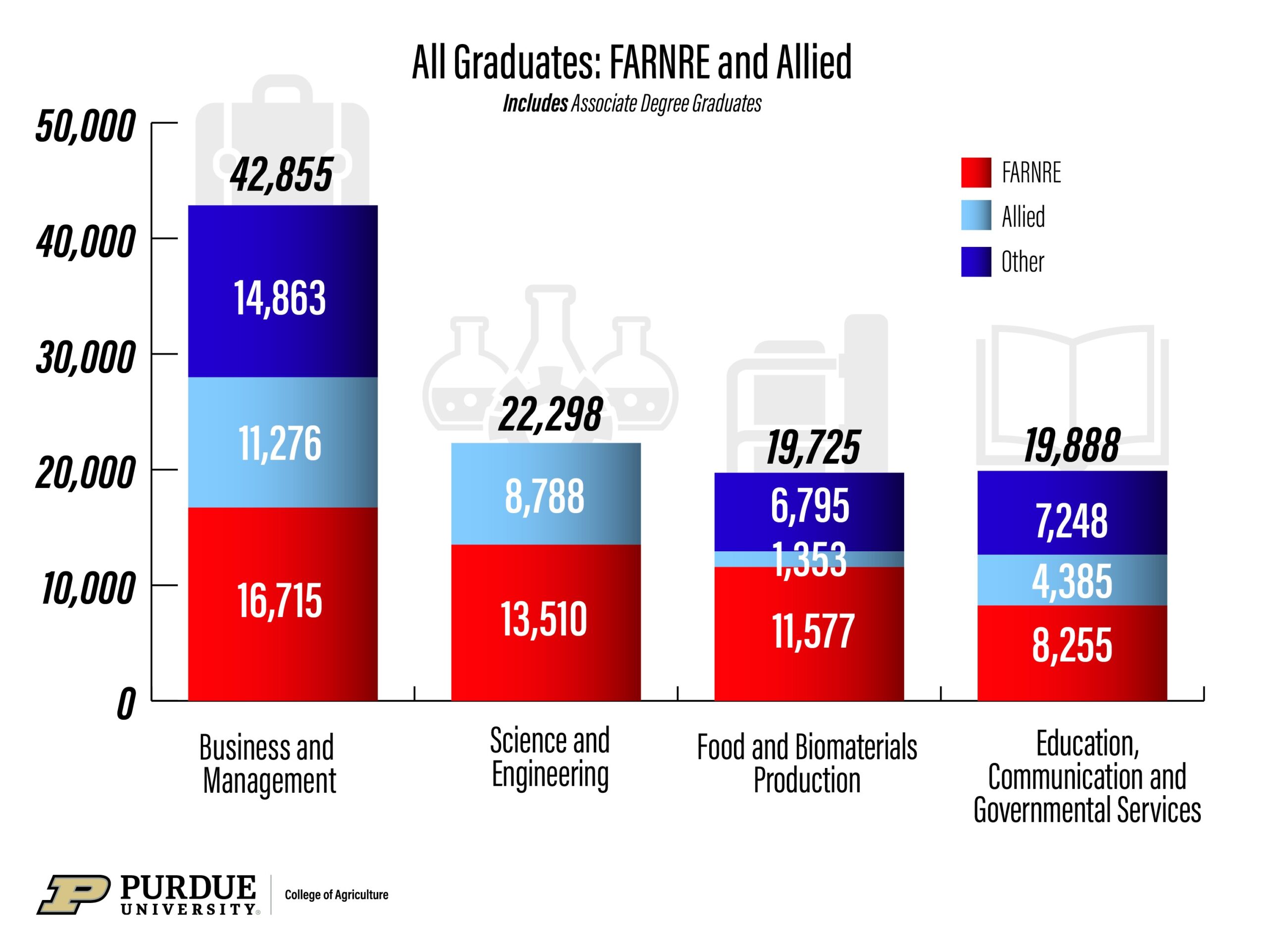
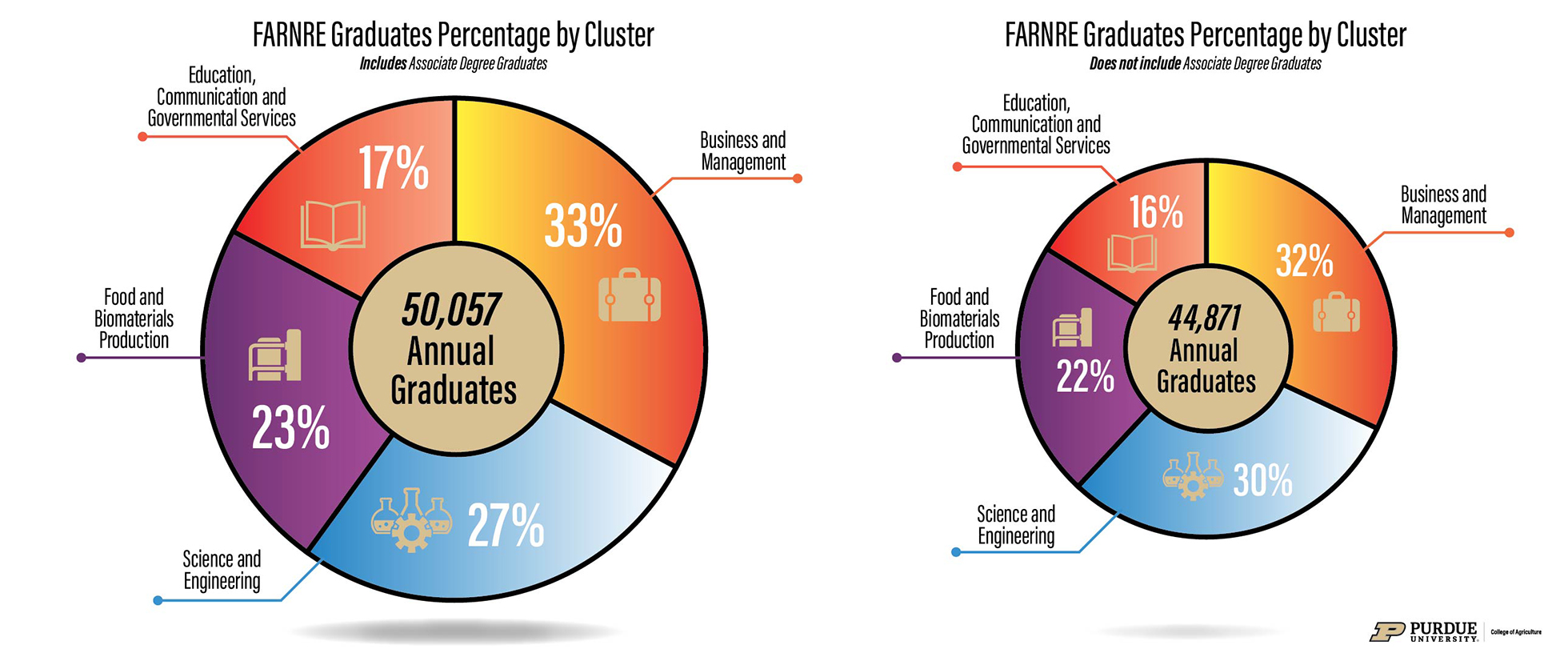
With this point noted, of the 50,057 FARNRE graduates, 33% will be in the Business and Management job cluster, 27% in the Science and Engineering cluster, 23% in the Food and Biomaterials Production cluster, and 17% in the Education, Communication and Governmental Services cluster (Figure 7). The job cluster breakdown for bachelor’s degree and above (44,871 graduates) is similar to the breakdown for all graduates (including associate degrees) with the bachelor’s degree and above group showing a slightly higher proportion in the Science and Engineering cluster.
Compared to allied majors and the other category, new graduates with degrees in food, agriculture, renewable natural resources and the environment will comprise approximately 39.0% of Business and Management graduates; 60.6% of Science and Engineering graduates; 58.7% of Food and Biomaterials Production graduates; and 41.5% of Education, Communication and Governmental Services graduates (Figure 8 and Figure 9). Interestingly, FARNRE graduates and allied graduates are expected to fill all the available jobs in the Science and Engineering category (the most likely to require a degree), while the biggest gaps between FARNRE graduates and available jobs are in the Business and Management category (26,139 graduates) and Education, Communication and Governmental Services (11,633 graduates).