December 8, 2021
Fight fire with fire When a virus gets worse, two things happen. First, potential guests are more willing to fight back (which is why we practice quarantine and treat patients in isolation rooms), so exposure to new guests is limited. Second, when the infected host dies, its ability to transmit the virus also ends. Therefore, from the perspective of the virus (especially one of the air), it is in their best interest to be able to infect as many people as possible. As a result, the strains that are most likely to be tolerated are those that are most infectious, but also the least severe. Natural selection is at stake here and a milder virus simply has a better chance of surviving in the environment. The appearance of this strain could help us beat the deadliest, in fact, use one viral sibling to eradicate the other. Scientists theorized that this may indeed be the case with Covid, as it is gradually evolving into a form that will not be worse than a common cold for most of us (after all, this is how many of us already suffer other human coronaviruses).
Omicron can help us end the pandemic and the coming weeks are crucial – Health Guild News
December 8, 2021
A drug used for fluorescent imaging during ovarian cancer surgeries, which was just approved by the FDA, lights up cancer cells “like stars against a night sky,” says Philip Low, Purdue University’s Presidential Scholar for Drug Discovery and Ralph C. Corley Distinguished Professor of Chemistry.
FDA Approves Purdue-Developed Drug for Ovarian Cancer Surgery
December 6, 2021
Sous-vide cooking has inspired an idea that took promising technology out of the lab and into the barn. Researchers at Purdue University have successfully developed an on-site bovine respiratory disease test that provides results within an hour.
December 6, 2021
Mohit Verma, a professor of agriculture and biotechnology at Purdue University’s Faculty of Agriculture, works in his laboratory. Verma has successfully developed an on-site bovine respiratory disease test. Credits: Purdue University / Tom Campbell
December 3, 2021
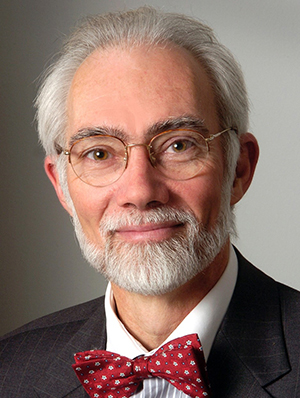
Robinson is the SVM Professor of Cytomics in the College of Veterinary Medicine, a professor of biomedical engineering in the Weldon School of Biomedical Engineering and director of the Purdue University Cytometry Laboratories. He is internationally recognized for his contributions to cytometry, including the latest spectral technology. Robinson’s work has led to 18 patents in the U.S., Europe and Japan. In 2019, Robinson received the Distinguished Service Award from the International Society for the Advancement of Cytometry. He is a past president of the International Society for Advancement of Cytometry and currently serves as editor in chief of “Current Protocols in Cytometry.” Robinson has taught advanced courses in over a dozen countries, given over 160 invited international lectures and made over 400 conference presentations.
Purdue trustees ratify faculty positions; approve new doctorate program, resolutions of appreciation
December 3, 2021
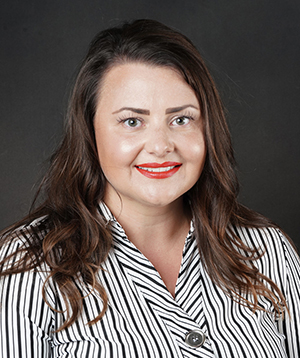
Oliver, a professor of food science and extraordinary teacher, has modernized and redesigned courses related to food safety to improve the student experience. Her primary course, Food Microbiology, impacts all students in the Department of Food Science. She engages students outside the classroom as well, providing them experience as teaching assistants, taking them to Institute for Food Technologists meetings and conducting study abroad opportunities. Oliver has generated more than $11 million in research and international engagement funding. Her work in food safety has touched people around the globe through projects in Afghanistan and through the first-of-its-kind Food Safety Innovation Lab funded by the United States Agency for International Development. Since coming to Purdue in 2010, Oliver has won numerous awards, including the Kohls Outstanding Teaching Award, Charles B. Murphy Outstanding Undergraduate Teaching Award, Corinne Alexander Spirt of the Land-Grant Mission Award and the USDA/APLU Justin Morrill Award, and she is a Purdue University Showalter Faculty Scholar.
Purdue trustees ratify faculty positions; approve new doctorate program, resolutions of appreciation
December 3, 2021
Purdue University’s Department of Animal Sciences in the College of Agriculture is providing a home and care for the National Thanksgiving Turkeys following the National Thanksgiving Turkey Presentation at the White House. The turkeys will live at Purdue’s Animal Science Research and Education Center, where they will reside in a separate enclosed indoor setting with access to a shaded grassy area. There’s also another Purdue angle to the story that ties in directly with the College of Veterinary Medicine. “The ADDL performed the required testing for the Presidential Turkeys to travel out of state,” said Dr. Kenitra Hendrix, ADDL director and clinical associate professor of veterinary diagnostic microbiology in the Department of Comparative Pathobiology. The turkeys were raised under the supervision of Phil Seger, 2021 National Turkey Federation chairman, and by southern Indiana turkey producer Andrea Welp, in cooperation with Farbest Farms. “We are very pleased to be the diagnostic lab of the 2021 Presidential Turkeys,” said Dr. Craig Bowen, assistant director of the ADDL. “The ADDL plays a vital role in protecting the health and safety of Indiana’s significant poultry industry, and so the testing is something we do all the time to support poultry producers like Farbest Farms.”
ADDL Provides Pivotal Testing for Presidentially Pardoned Turkeys at Holiday Time
December 1, 2021
Cytalux (pafolacianince), a drug that binds to ovarian cancer tissue and glows when exposed to fluorescent light, has been approved by the U.S. Food and Drug Administration (FDA) to help surgeons detect ovarian tumors during surgical procedures in patients. A Purdue University spokesperson told Fox News that Philip Low, Purdue University's Presidential Scholar for Drug Discovery, invented the drug. Low described in a press release that when a surgeon turns on the near-infrared light during the surgery, "those lesions light up like stars against a night sky." "While many surgeries result in complete resection of all cancer tissue, a substantial fraction unfortunately leave buried or concealed tumor tissue behind, often resulting in recurrence of the cancer," Low told Fox News. He added: "To help prevent the latter outcomes, we have designed a cancer-targeted fluorescent dye that homes specifically to cancer cells that express a folate receptor and causes them to fluoresce brightly upon illumination with near infrared light."
FDA approves 'glowing tumor' drug to help surgeons identify ovarian cancer cells
November 28, 2021
An investigation recognized how the vitamin D, found in the fatty fish and can also be obtained by taking Sun, it serves for reduce inflammation of T cells. These cells play a vital role in the body’s immune response to infection caused by coronavirus.
This is how vitamin D works to reduce inflammation of the lungs
November 26, 2021
Scientists are sharing insight into how vitamin D could help in severe COVID-19 cases by revealing how the vitamin functions to reduce hyper-inflammation caused by immune cells.
Study shows how vitamin D could halt lung inflammation in COVID-19
