The Pressure of Perfectionism
College students, and especially Purdue students, often talk about challenges they are facing related to perfectionism. In fact, perfectionism has been found to be on the rise in the college-aged population (Curran & Hill, 2019).
As you might guess, aiming to do your best is often motivating and supportive of academic success. But there is also a negative aspect of perfectionism, called maladaptive perfectionism which can lead to behaviors like procrastinating, avoiding challenging concepts or attending class when not understanding the material, or even avoiding turning in an assignment that you may not think will get a “good grade”.
Adaptive perfectionists learn from mistakes and failures; maladaptive perfectionists tend to become even more obsessed with their goal OR start to actively avoid things that might lead to failure.
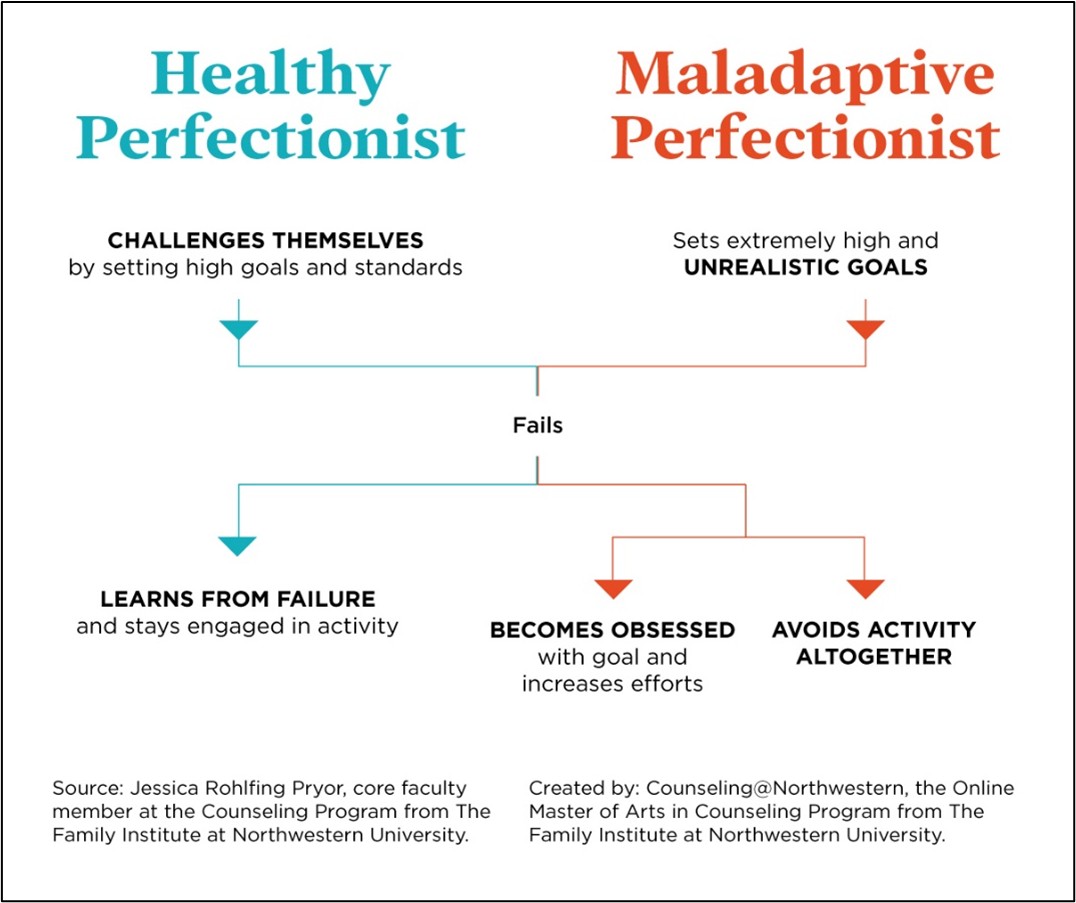
How can you work through maladaptive perfectionistic strategies? Dr. Jessica Rohlfing Pryor from Northwestern University’s Perfectly Imperfect Lab shares the following strategies and resources:
- Remember: Perfectionism is an “absolute illusion.” We are constantly flooded with distorted messages—from parents, teachers, peers, and broader sources (e.g., entertainment, social media)—that nothing but the best is good enough and that perfection is possible. Recognizing that is an unattainable illusion can help.
- Break goals into bite-size pieces. Perfectionists may become overwhelmed by the size of a goal, such as planning a wedding, studying for college or graduate school exams, or taking on a new work project. Break down big-picture goals into smaller, manageable chunks and celebrate each smaller accomplishment.
- Interrupt the self-critical voice in your head. Replace it with a positive statement, or try to redirect your thoughts to more constructive thinking. Tell yourself, “It’s okay if this isn’t perfect.”
- Do something positive for yourself. In a moment of stressed-out, perfection-seeking behavior, try to press pause. Practice relaxed breathing or take a walk if possible. Stay grounded in your five senses. Then allow yourself to reflect on this question: “What will happen if I’m not perfect?”
- Reach out to a professional. Pryor’s research shows that individuals with maladaptive perfectionism are less likely to seek out help from family and friends or professionals. If you are suffering from perfectionism, talk about it; seek support through resources such as CAPS. Reach out to friends, advisor, ODOS, or your health care provider if you need assistance finding resources and don’t know where to start.
Do you think perfectionism or your mindset around academics has been a barrier for you in the past? What’s a shift in your mindset you want to make this semester? Try to enjoy this beautiful weather!
- Success Messages