Empowering UNSA Professionals through cutting edge Agricultural Technology training
September 19, 2025
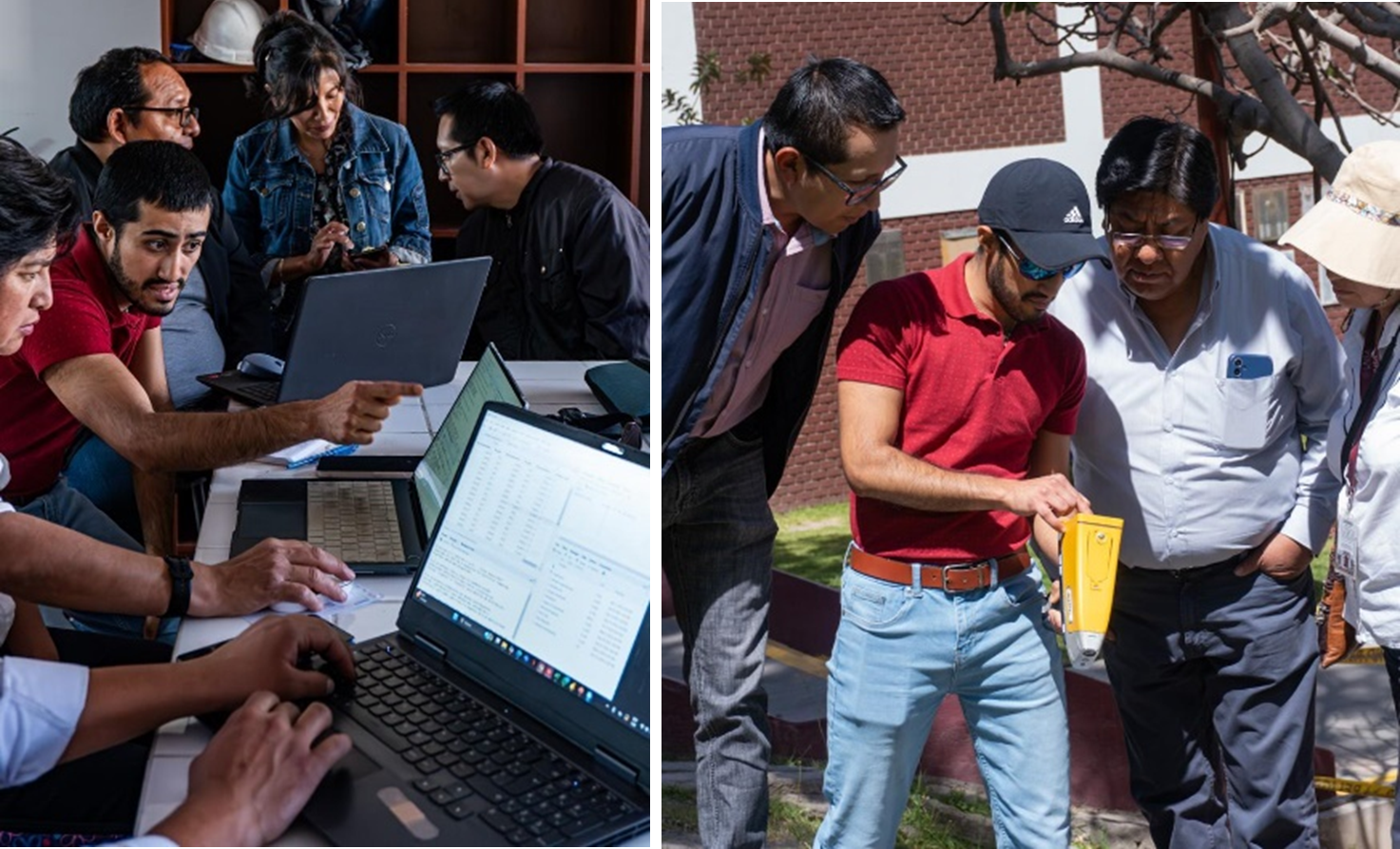
Building the research capacities of scholars in developing countries is often challenging due to factors such as limited funding, inadequate institutional infrastructure, insufficient training opportunities, and language barriers. International collaboration, however, offers an effective pathway to overcoming these constraints. In line with this approach, the Nexus Project ‘Organic Farming Systems (OFS)’ organized a theoretical and practical course titled ‘Advanced Tools in Agronomic Research’ to strengthen the research capabilities of our partner researchers in Peru. The training took place at the National University of San Agustin (UNSA) in Arequipa, Peru, from August 18 to 22, and included both in-person and online sessions. A total of 27 participants attended the event.
During the three days of in-person sessions (August 18-20), 13 professors and ten professionals from the Agronomy Department received training on two analytical tools: 1) Portable X-Ray Fluorescence (pXRF), and 2) traditional and modern genomic and bioinformatics tools for microbiome analysis. The pXRF component covered theoretical and practical aspects, including soil sampling and preparation, data acquisition, data processing in RStudio, and interpretation of results. The microbiome training addressed key topics such as experimental design, sample collection, DNA extraction, PCR techniques, and primer selection. In addition, during the two days of online sessions (August 21-22), five professors and nine professionals from the Engineering Department learned about main types and applications of commercially available environmental sensors. The sessions emphasized their use in disease prediction, climate management in protected structures and open fields, and the optimization of pest and disease control strategies.
This initiative has significantly strengthened UNSA’s research capacity. By acquiring new technical skills, UNSA researchers are now better equipped to analyze their own data and apply advanced methods in future projects. Moreover, the course has encouraged the adoption of innovative technologies that support the continuous improvement of soil and plant ecosystems, contributing to the long-term goal of achieving agricultural sustainability in Arequipa.
Contact Details
- Rosa Cossio
- rcossio@purdue.edu
- 765-494-0721