 .
.The Lifetime Bond of Sisterhood
The bonds of sisterhood created in a sorority transcend all backgrounds as women come together to share values, grow together, and support one another. Purdue alumna Ellie Wang has seen how this bond has played out over a lifetime as a member of Kappa Alpha Theta.
“It’s been 55 years, but I could go right back to living in the house with everyone,” Ellie says. “I’ve been very fortunate. My life has been very good and Kappa Alpha Theta has been a big part of it in helping me become a well-rounded person.”
Ellie’s journey began with the immigration of her parents, Ting Yang and Daisy, who came to the US from China as graduate students to attend Purdue University in 1947. Ting Yang and Daisy were part of thousands of Chinese who sought to study abroad as Chinese society focused on promoting modernization through education. At Purdue, Ting Yang and Daisy were part of a cohort of 47 Chinese students attending the university.
During their studies, Ting Yang and Daisy met Norris and Eleanor Shreve, two influential figures in Purdue history. Norris served as head of the School of Chemical Engineering. He later assumed the duties of directing the Purdue-Taiwan Engineering Project, which culminated in the creation of Taiwan’s Cheng Kung University. Eleanor was an author, educator, world traveler, musician and constructive activist who wrote and conducted scenarios for radio when radio was at its peak as an entertainment and communications medium.
The Shreves were important mentors to Ting Yang, Daisy and later, their two children – who were named in honor of Norris and Eleanor. In addition to being their namesakes, the Shreves also serve as godparents to Ellie and Norris Wang. The Shreves helped the family assimilate into American culture and encouraged them to get involved in the community through various organizations.
Ting Yang and Daisy remained active members of their community once they moved to Marion, Indiana, and began raising their children – which made an impression on Ellie from a young age. She grew up in an environment that encouraged her to be active in organizations and was the chaplain for a sorority during high school.
“The Shreves really helped all of us get acclimated,” Ellie says. “Both of my parents were very outgoing and community-minded. We were very active in the church, country club, local politics and boards. When it came time for college, sorority life was totally expected and something I was really interested in.”
The nudge towards Kappa Alpha Theta came from the niece of Eleanor Shreve’s secretary, who was a Theta and recommended that Ellie take a look at joining the sorority. At the time, there were very few Chinese students involved in fraternities or sororities. Ellie was the first Chinese American woman to join the Alpha Chi chapter of Kappa Alpha Theta and she recalls one other Chinese woman in her class pledging to a sorority. While there was a Chinese Student Association on campus, Ellie was looking for a more immersive community and found Kappa Alpha Theta to be the perfect fit.
“I never really noticed the fact that I was the only Chinese girl in my sorority for years,” Ellie says. “Sorority life with Kappa Alpha Theta was one of the best things I ever done. It was known as a good sorority across campus and nationally, and it has proven to be a lifelong experience.”
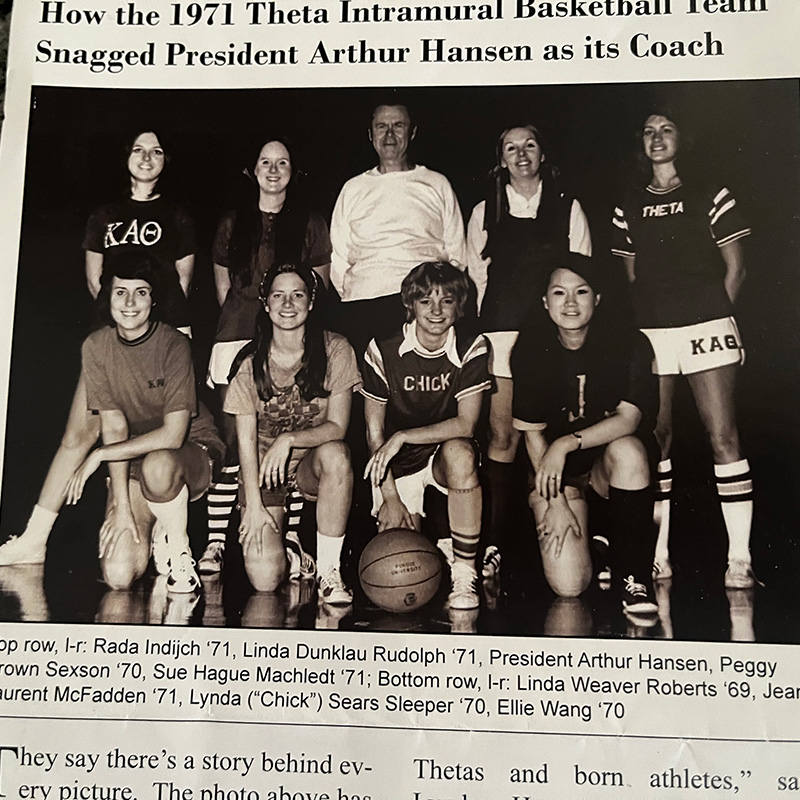
Ellie fondly recalls many fun traditions from her time living in the Kappa Alpha Theta house, including serenades and fraternity raids, where Thetas would pull pranks on other houses. She recalls a fraternity letting a live turkey loose in the Theta house and the hilarity that ensued with trying to remove it. One of her cherished memories was playing on the sorority basketball team, which was coached by Purdue President Arthur Hansen, whose wife, Nancy Tucker Hansen, was a Theta.
Ellie’s brother, Norris, was also a part of her experience as a Theta. Norris would visit Ellie for the sorority’s Little Brother weekends and especially enjoyed sleeping in the bunk beds. Like Ellie, Norris was an engaged member of the community, serving as a Tippecanoe County magistrate, West Lafayette City Council member and adjunct professor at Ivy Tech Community College.
References to some traditions, such as the Theta practice of standing on a chair when wanting to make a particularly important point in a meeting, remain part of her life.
“I don’t stand on the chair, but my husband doesn’t understand when I say, ‘Honey, I’m not on my chair for this issue,’” she says. “And then I think back to being in the sorority house.”
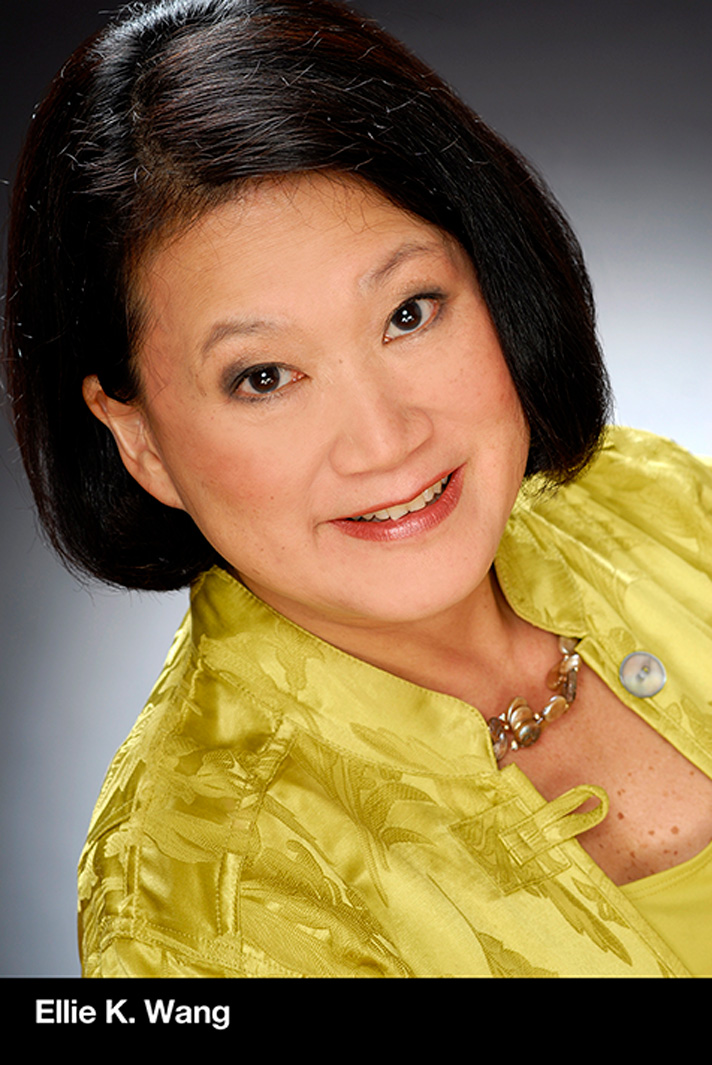
Ellie went on to enjoy success in her careers as a physical therapist and freelance actress. She worked for over 50 years as a homecare and rehabilitation specialist in physical therapy and served on several notable related boards, including on the Maryland Governor’s Task Force on Aging. She has also enjoyed a long television career and became a card-carrying union member of the Screen Actors Guild (SAG) and the American Federation of Television and Radio Artists (AFTER). She served as on-air fundraising talent for the Public Broadcasting Service (PBS), WETA-TV (Washington D.C.) and Maryland Public Television (MPT) and currently serves as a commissioner for MPT.
Throughout her career in television and radio, Ellie routinely met and learned of fellow Thetas who displayed a similar pride in their experiences. Marlo Thomas, perhaps best known for her role in the sitcom That Girl and her work as national outreach director for St. Jude’s Children’s Research Hospital, is one example who displayed her Theta pride by flying the sorority’s kite symbol on her TV show. The threads of Theta pride were woven through Ellie’s professional endeavors and she has remained connected to the sorority through alumni groups.
“Things like that have been a wonderful bridge,” Ellie says. “Being a Theta has crossed boundaries from collegiate life on and it’s been so well-rounded.”
Now retired from her career as a physical therapist, Ellie remains active in television through her work with MPT and serves on the boards of several related organizations. She stays connected with Kappa Alpha Theta through their alumni organization in Maryland and serves Purdue’s Alpha Chi chapter as a member of the facilities board.
No matter the endeavor, Wang’s love for her experience as a Theta shines through.
“It’s the sisterhood and camaraderie that prevails within the sorority that I still respect and value,” Ellie says. “Not only loyalty, dedication and belief in our sisterhood, but being able to translate those things into other organizations. What transcends in all organizations is that camaraderie and belief in the goals and mission of your organization – and that’s especially true for being a Theta.”